Showing posts with label genii loci. Show all posts

Wednesday, April 30, 2014

Fertility Charm for the Garden

 
I make these charms both for female fertility and to bury in my garden to bring abundant growth. I use milkweed pods because of its vulva shape; inside I use beeswax, shells and herbs associated with fertility and bounty.
 
Should you wish to make your own, Bealtaine or the Spring Equinox would be excellent times to bury in your garden, accompanied by a prayer for a prosperous growing season and offerings to the spirits/deities of agriculture.
 

Monday, March 10, 2014

Scenic

These are some photos I found that I took back in 2009 in one of my "sacred spots", on the shore of Lake Nipissing.


Saturday, November 30, 2013

Intentions Behind Making Offerings {Part 2}

This is a follow up to a post I did a few days ago Intentions Behind Making Offerings; there has been quite a bit of discussion over at Tumblr in response to the post over there, which showed me that there was a need for me to clarify a few things, which I am doing over here as well. You can see the discussion over at Tumblr here.
 
*********
 
 I have read all the responses and comments so far to my initial post, and I appreciate all the feedback. Before I respond to other people’s thoughts, I will reiterate that everything that I am writing here is just my own opinion, I am not representing any group or stating that these are the opinions of those who share a similar faith as my own {although I would be especially curious to hear what other Gaelic Polytheists and Celtic Reconstructionists feel on this topic}.
 
After reading the responses I have gotten and re-reading my initial post, I feel that I was not thorough enough to begin with and made some assumptions that others who would be reading my post would already know my overall position on making offerings and have a general feel of my position when it comes to relationships with deities, ancestors and spirits. To save some time in completely repeating myself, I welcome people to read the other post I had linked to here. I will however be going into further detail as necessary.
 
Something else I failed to be clear on in my initial post was what types of Pagans, polytheists and magical practitioners I was originally talking about, which were those who feel they practice some “Celtic” based or inspired faith. I have tried to find the original article that I had alluded to and unfortunately have not been able to find it on Tumblr anymore. It was called something like “Offerings Celtic Style” and was originally posted on Tumblr around July or August. If anyone remembers that post and it is still around, please feel free to share it.
 
There are people from different traditions and faiths that have responded to this, most notably people from a Kemetic path {a timely discussion is going on right now, which I recommend other people read, as it is quite interesting, which can be seen here}. I will not pretend to have even the slightest clue what it is like to deal with the Gods of people from a completely different spiritual path than my own, and it could very well be that what I consider to be bribes is perfectly acceptable to their Gods and their value-system. I am comfortable saying though that I do not think that this approach is acceptable with the deities that I have a relationship with nor is this an approach that fits into my own world view.
 
Some folks have mentioned the idea of a “gift for a gift” and someone had also used the word “reciprocity”, which I feel both encapsulate what I am trying to get at here. The spirit in which I see these terms is in complete opposition to some people who think that they can take without giving back or only give something to manipulate someone to get what they want.
 
Someone mentioned if we don’t get something back from the Gods then what is the point? Indeed. There is something I feel I get back including guidance, protection, wisdom. I may ask for something that I feel I need or ask on behalf of someone else, that does not however mean that my Gods are here to fulfill my every whim and demand.
 
Long before I start asking for things, while I am still in the early stages of developing a relationship with a deity or spirit, I will make offerings, take actions to demonstrate my intentions, to show hospitality. If and when a relationship is established, then I may ask for something.
 
While I do not pretend to be “equal”, I do espouse to treat my Gods, Ancestors and the Spirits I work with as I would someone who is dear to me. They are not here for me to use. That said, I do of course get something back for having a relationship with them. If I did not, much like a one-sided friendship, eventually ties would be severed.
 
It is difficult for me to clearly define how I see my deities, although, at least in part, I see them as mentors and kindred. If I were to have a wise person in my life teaching and guiding me, there would be an automatic amount of respect that I would have for them; anyone who I feel is my kindred, I have an automatic amount of respect for them.
 
Besides what I already get out of a relationship with a mentor or kindred, I may ask that person for a favour. The may agree to grant that favour, or they may not. I would still respect them either way and I would try to avoid manipulating them, giving them ultimatums, or bribing them as I see these things as disrespectful.
 
For me offerings are made with a generous heart; they are just one expression of the values that I see as sacred, the values that I try to uphold in every day life.
 
I hope that I have somewhat clarified my position and I welcome further comments and discussion, whether you agree or disagree.
 
Sláinte!

Laurel

Sunday, April 21, 2013

"Nature Friendly" Offering Stones

Like quite a few other Pagans and magical practitioners, I have embraced and enjoyed the idea of making offering stones. However, I have seen some made with food colouring, sparkles and salt, ingredients which would be fine if left on an indoor altar, but probably not the best if you are leaving them outside.

The base recipe that I use is very simple and inspired by salt-free play dough:


2 cups organic unbleached all purpose flour
1/4 cup organic Scottish oats 
1/2 cup of water {I use river water that I collected from a place that is sacred to me}

Mix all the ingredients together until it has a smooth play dough texture. Add more water if necessary.

I then add dried botanicals to mine, depending on who they are meant for. Pictured are my staple offering stones to my Deities, Ancestors and Land Spirits. If you wanted to add colour, I suppose one could try to use plant dyes, although this is not something that I have done myself.

Then I leave them to air dry on a wire rack for two or three days. I make smaller batches that I use up quickly, so I am not sure how long of a “shelf life” they have. If this is a concern, I am sure that they could be kept in a freezer in an air tight container once they have fully dried.
 
Sláinte!

Laurel

Saturday, January 5, 2013

Spiritual Land Stewardship

Restoule, Ontario
For those of us magical practitioners and Pagans that work closely with the land and nature allies, we are likely to also be passionate about conversation and environmental issues. We may be members of environmental groups, grow some of our own food, buy local and organic, and take other steps to tread lightly as possible; others may feel that they are obliged to protect certain ecologically sensitive and sacred areas through more spiritual means.

Over the last little while I have been happy to note that there are others in my region who act as spiritual land stewards or are interested in doing so. With that in mind, I thought that I would share some resources that I have found very helpful, as well as a few posts that I have done in the past that might give folks some ideas.

Some of these resources are specific to my region, while some are for any region. I also think that any of the resources of a spiritual nature could be adaptable to just about any faith or magical practice.

Books

Animal Tracks of Ontario by Ian Sheldon
Art of Conversation With the Genius Loci by Barry Patterson {I don't agree with all of this book, but I think that it is still worth a read}
At Home in Nature: Modern Homesteading and Spiritual Practice in America by Rebecca Kneale Gould
Birds by Roger Tory Peterson 
Discovering Rock Art in Ontario's Provincial Parks by Thor Conway 
Mammals of Ontario by Tamara Eder
Mushrooms of Ontario and Eastern Canada by George Barron
Native Trees of Canada
Old Man's Garden by Annora Brown
Ontario Weeds: Descriptions, Illustrations and Keys to Their Identification
Ontario Wildflowers: 101 Wayside Flowers by Linda Kershaw
The Book of Swamp and Bog by John Eastman
The Forest Trees of Ontario by J.H. White
The Woodland Way: A Permaculture Approach to Woodland Management

Articles
 Websites
If you know of any resources that are not on here, please feel free to share them in the comment section. :)

Sláinte!

Laurel

Wednesday, October 10, 2012

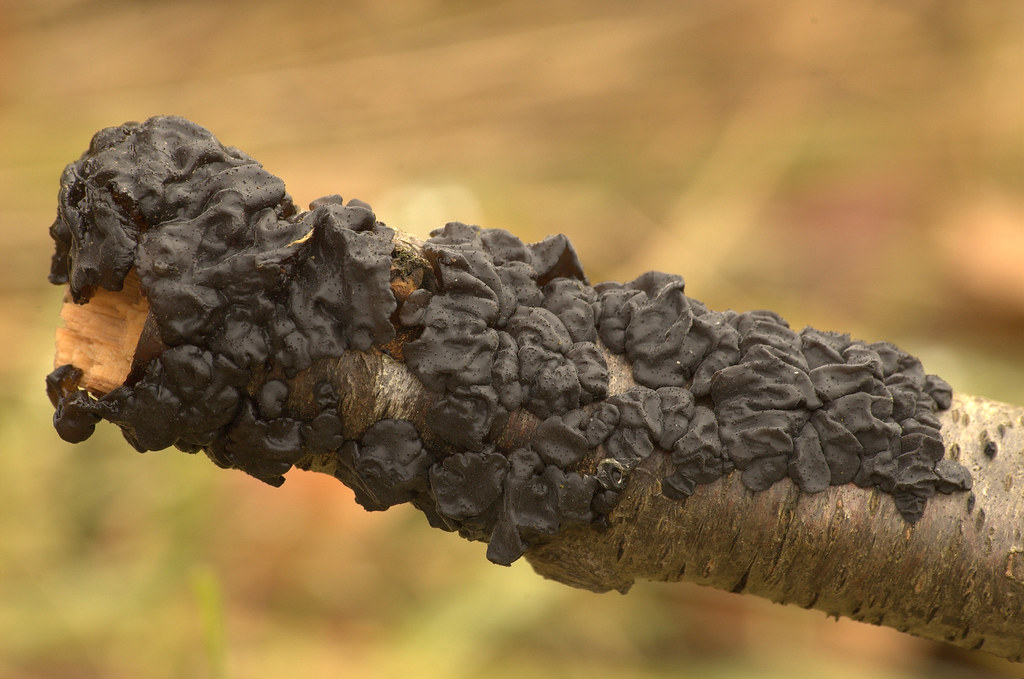
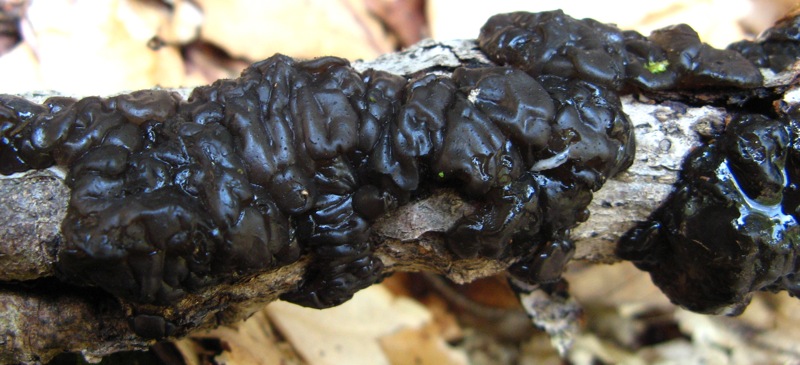
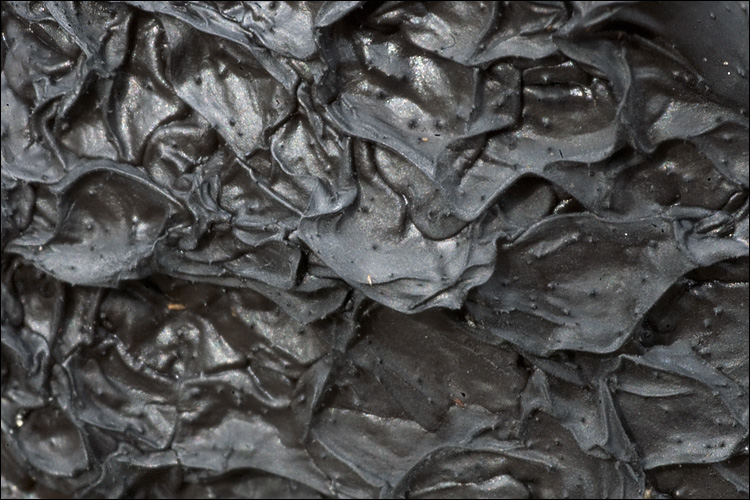
Black Witches Butter {Exidia glandulosa}


Photo from AnneTanne

Other Names: Black Faery/Fairy Butter, Black Jelly Fungus, Black Jelly Roll, Warty Jelly, Devil's Butter, Troll-Smor.

Description: One could not say with a straight face that Black Witches Butter is a pretty fungus, and I have come across a few that are very reminiscent of poop. But physical beauty is certainly not everything!

Black Witches Butter is a jelly fungus, just like the similarly named Gold Witches Butter. It is anywhere from a greenish brown to almost black in colour, and comes in masses up to 30 cm in diameter. Although generally jelly-like, when in very dry weather, it becomes crusty and can sometimes look like a completely different fungus. It can be found in North America and in many places in Europe.

Warnings: As with all herbs, one should make sure to be thoroughly informed before ingesting them, and is best to do so under the guidance of a qualified healer.

I have not ingested it myself, so I am certainly not qualified to say if Black Witches Butter is edible or not. There also seems to be quite a wide disagreement on its edibility, so with that said, it is probably best to err on the side of caution.


Photo from Cornell Fungi

Cultivating: Black Witches Butter is a fairly common sight in hard and mixed wood forests, most often seen in cooler regions. It is generally found on recently fallen hardwood branches, especially on those that once belong to an oak, birch, and alder tree. The fruits are seen in Spring and Autumn, and sometimes during a cool period in Summer and a warm one in Winter.
 
Medicinal/Remedial Properties and Lore: In Asia, many different jelly fungi have been used for their healing properties for hundreds of years. They are most coveted for being immune boosters, and to help with health conditions effecting circulation and breathing.

According to The Hiker's Notebook, jelly fungi have been found to:

...reduce inflammation, lower cholesterol and are useful in the treatment of allergies and diabetes.

The Hiker's Notebook goes on to say:

A group of Israeli and Ukrainian researchers evaluated fungi of the Tremella genus in 2000 and confirmed that they exhibited antitumor properties and that they could be used to "improve immunodeficiency … and to prevent senile degeneration of microvessels."
 

Photo from amadej2008

Magical/Spiritual Properties and Lore: In Popular Names of British Plants by Dr. R.C. Alexander Prior, it got its name from:

its buttery appearance, and unaccountably rapid growth in the night, which has given rise to a superstitious belief, still prevalent in Sweden, that witches milk the cows, and scatter about the butter on the ground.

The authors of English Botany give credit Johann Jacob Dillenius for inspiring the name, because according to him, Black Witches Butter was thrown on a pyre to counteract malignant witchcraft.

I have personally used it in this manner for banishing magic, and have found it quite effective. I have some in my possession and will be using it for this purpose again soon.

Other Uses: None really that I know of, although it could be perhaps used in a prank to mimic poop! ;)

Sláinte!

Laurel

Wednesday, August 22, 2012

An Afternoon of Wildcrafting


Yesterday I went wildcrafting in one of my favourite spots, spending a couple of hours harvesting to replenish some of my herb supplies. It was a lovely day and I had equally lovely company with me too.

I like to wildcraft with others so I can have an extra set of eyes and ears, but I only go with those I completely trust to keep my spots a secret, so they are not over harvested {I talk a bit about this in my Wildcrafting Etiquette post}. This particular area is especially important to me because this is where I get a good portion of my rowan berries and sweetfern.

Before I got to harvesting I made my way to the spot where I make my offerings to the spirits of the area. After that we also spent some time just enjoying the beauty of the place. Below are some photos of our day.

The offerings.
One of the lovely rowans.
A place that I call Hagstone Rock.
All sorts of pretties, including golden rod.
Even though we came across all sorts of fungi, I didn't harvest any. That will be for the next trip.
Lots of signs of bears down this pathway.
Himalayan balsam {thanks Cathy for letting me know what they are!}
Harvest specimens: yarrow, milkweed pods, rowan berries, tansy, golden rod, staghorn sumac berries, and sweetfern.

Sláinte!

Laurel

Sunday, August 12, 2012

A Good Start to the First Harvest

mixed grain loaf
Things have been quite busy around here the last few weeks, but thankfully I have had time to celebrate Lughnasadh and have been able to spend a lot of time in our garden.

Just like with the other cross quarter days I observe Lughnasadh over a period of a few weeks instead of just a day or two. While mostly associated with a time to honour Lugh and Tailtiu {and I do honour Them as well}, my main personal focus at this time is Macha.

One of the rituals I like to do around Lughnasadh is a reaping blessing, which as you can see below from my adaptation of a reaping blessing from Carmina Gadelica is traditionally done on a Tuesday. Lughnasadh Eve fell on a Tuesday this year, which is when I originally wanted to do it. Unfortunately the weather was really shoddy that day; stuck indoors, I setup our seasonal altar on Lughnasadh Eve.


Lughnasadh morning I ended up carrying out the reaping blessing the next day, along with a nice harvest.


On Tuesday of the feast at the rise of the sun,
And the back of the bountiful fruits to the east,
I will go forth with my basket under my arm,
And I will pluck up the fruit.
While the harvested fruit is in my grasp,
I will raise mine eye upwards,
I will turn me on my heel quickly,
Rightway as travels the sun
From the airt of the east to the west,
From the airt of the north with motion calm
To the very core of the airt of the south.
I will give thanks to the Hosts of grace
For the growing crops of the ground,
They will give food to ourselves and to the Tribe
According as They disposeth to us.
Macha, Airmid, Flidais and Bride,
Gods, Ancestors, and Nature Spirits kind.

blue jay bush bean harvest
The rest of the day was spent baking bread and making a yummy dinner and offering rituals in the evening.


A few days later I made more offering incense for Macha as the ingredients had become available once again. One of the blends I created is burnt in thanks for the bounty of the fields, blessing of the harvest, and for abundance in general; the other blend is for divination, magical workings, connecting with the dead and for battles. These two blend will be among the incense I will have available in the store.

Once more crops begin to ripen in our garden, we will then have our "big" Lughnasadh feast which will close things up. To see how our garden is doing, you can go check out a recent post over at my other blog.

Sláinte!

Laurel

Saturday, July 21, 2012

Midsummer Herb Harvests

after a morning in the garden
Some folks have asked me what rituals I do when I harvest herbs and have requested that I share some photos of those harvests. This is just a post sharing a bit about that.

Just like pretty much every other activity around here, rituals for herb harvesting are often of an offertory nature. In this case offerings are left for land spirits and for one of my household deities. Since the bigger herb harvests begin around the end of June, my seasonal altar will be dedicated to Airmid from Midsummer until around the end of July, when it will then be set up for Lughnasadh. 


During this period regular offerings such as herbal tea, incense, herb bread and butter, salads, and fresh cut flowers are left to Her on the altar. Frequent offerings of honey and tobacco to land spirits are left out in a place in our garden dedicated to them, which is done year round.

A part of the altar is also dedicated to pollinators, with offerings of thanks for all the work they do in the garden.


Just like when I harvest plants from the wild, I will make offerings to the plants I am harvesting, usually that will be a nourishing powder mixture that I make {more about those will be talked about in the future} and I will let the plants know what I intend to use the harvests for. Sometimes when being harvested for a particular purpose, I will harvest them at a certain time of day and at a certain phase of the moon. These harvests are usually accompanied with spoken charms.

The photos below were taken during one of the days that I did a general harvest during the time of the full moon.

Wormwood

Lemon Balm
Perriwinkle, Motherwort, Lady's Mantle, Peppermint, and Sweet Woodruff
Common Comfrey
Throughout the rest of the season I will still harvest herbs right up until the frosts, although the yields tend to be quite less.

For those who are interested, I post more often about our garden on the nefaeria blog.

Sláinte!

Laurel

Saturday, May 12, 2012

Wildcrafting Etiquette {from this Practitioner's Point of View}

It seems that harvesting wild and wayside plants has become more popular in the last few years, and really it is no wonder! Foraging for useful, edible, medicinal and magical plants is a great way to save money or just get outdoors. While I think it is great that folks are re-learning old skills, wildcrafting does come with its risks: whether it be over harvesting, misidentifying plants, or people making a complete mess of wild spaces, I think that all of this can be avoided.

Over the years I have developed a code of conduct in regards to my own wildcrafting practices, which I will share in this post. I hope that it will be useful for aspiring wildcrafters.


This is the place to start before beginning any wildcrafting adventure. Familiarize yourself with the land. Obviously it is important to find out if the place is private property or protected habitat. For me this is just the bare minimum.

I will visit a place for at least a whole calendar year before I even think of harvesting from it. I will observe the growth patterns, note which plants seem to do well in that location and see if there is anything that I can do to help improve the land {such as clean up trash}. I build a relationship with the place before taking from it.

Even after I start wildcrafting in a place, I will go back as often as I can, not to take from it, but to make sure that it is doing well. Besides picking up trash and the like, I do magical workings to make sure the place is protected.

Of course most will probably not go the "extremes" that I do, although I think that it is important for people to give back instead of just taking. I will talk about this a little more later in this post.


As far as safety goes, this is probably the most important thing to keep in mind. If you are not 100 percent certain of what you are harvesting, then leave it alone.

Start with plants that are easily identifiable for you. Read books of plant identification and bring those books with you. Bring a checklist of what to look for. One thing that I have found especially helpful when I am not sure what something is, I will take a photo of it and see if I can find it on great websites like Andy's Northern Ontario Wildflowers. 

Once you have identified a plant, make sure that it is alright for you to harvest it. Is it a protected species? Is there enough of it in the area that you won't impact it by harvesting it? Do you have the suitable equipment on you to harvest it safely?

You will probably have most of this covered if you have really familiarized yourself with a place before harvesting from it.


It is good to keep in mind why you are looking for specific plants and what they will be used for. This will help you gauge how much to take and when to harvest.


Depending on the purposes of your harvest, you will want to know when to collect what you are looking for. There are many plants that have more than one use, such as cattails, although you can only benefit for each use at certain times.

You will also want to make sure that the timing is right so your harvest is not interfering with the growth process, and if it is, that there are plenty other of the same species in the area so impact is low to nihil.


Take only what you need and you know that you will use. Over harvesting can devastate a habitat, so it is again good to note how much is growing in that area. If you are new to a specific plant, you may wish to err on the side of caution and take less than what you think you will need. As you become more familiar with that plant, you will better know how much to take.

I will be quite secretive about where my spots are unless I really trust the person that I am telling. The last thing that I want is for word to spread and have that spot over harvested.


Making sure that you clean up after yourself after wildcrafting is certainly good manners, although there are many other ways of giving back. You could do things that I have already mentioned such as cleaning up trash, you can join or create a group to protect that area, you can rescue plants from an area that is being developed, or you can leave natural and beneficial offerings {such as watering}.

Please feel free to share anything that you think that I may have left out.

Sláinte!

Laurel

Friday, April 6, 2012

Some Thoughts on Offerings


photo by Dominic Alves
Since my post on daily rituals I have had a few people email me and leave comments asking about what type of offerings I make, so I thought that I would do a small post on the subject.

In both my faith and craft offerings play a central role, and for me it is just as important to make sure it is a proper offering as it is to give it. This often means doing some research as well as experimenting.

Generally when we give gifts to loved ones, we put some thought into those gifts and making offerings is not much different. For example, I would never make an offering of alcohol to local nature spirits, as it may be seen as offensive, so instead I might give flowers or maple syrup. When making offerings for multiple recipients, you can either make individual offerings, or one that would be appreciated by all that the offering is given to; in the case of our daily offerings to our Deities, Ancestors and the Genii Loci, we often give honeyed water.

Every time I go wildcrafting I also make offerings, sometimes to each individual plant and sometimes to the small area that I am wildcrafting in. On occasions like this I think that it is especially important to make sure that whatever I am offering will not upset the local environment and is always biodegradable.

Making offerings to Ancestors might be the easiest to figure out if you knew them while they were alive. It could be their favourite food or drink, making a donation to their favourite charity, or even maintaining their gravesite.

Some of the people who contacted me are also Celtic Reconstructionists and were wondering about offerings to the Gods. Our home is dedicated to specific Deities within the Irish pantheon, so the offerings we do make to Them are tailored to each Deitiy. We also leave out offerings for the whole pantheon too, which is often good quality whiskey, mead and favoured foods. {There are a few wonderful online resources about making offerings as a Celtic Reconstructionist which I will list at the end of this post.}

Besides making sure that offerings are appropriate and thoughtful, the last important thing I like to keep in mind is quality. If the offerings are going to be something I make, then I will put my best effort into it. When it comes to ingredients and such, I will try and use local, organic, or items we have grown ourselves.

Well, I do hope that has answered some questions and if you folks have anymore, please feel free to contact me or leave a comment. Also, please do check out the links below:


Calendar Feasts and Customs by Francine Nicholson {some good ideas for offerings on the feast days for Celtic Reconstructionists}


How to Create a Genius Loci Profile by Sarah Lawless {a great way to really understand your local nature spirits and deciding what types of offerings to make}

Sláinte!

Laurel

Tuesday, March 13, 2012

Common Bluebell {Hyacinthoides non-scripta}


A fine and subtle spirit dwells
In every little flower,
Each one its own sweet feeling breathes
With more or less of power.
There is a silent eloquence
In every wild bluebell
That fills my softened heart with bliss
That words could never tell.
Yet I recall not long ago
A bright and sunny day,
'Twas when I led a toilsome life
So many leagues away;
That day along a sunny road
All carelessly I strayed,
Between two banks where smiling flowers
Their varied hues displayed.
Before me rose a lofty hill,
Behind me lay the sea,
My heart was not so heavy then
As it was wont to be.
Less harassed than at other times
I saw the scene was fair,
And spoke and laughed to those around,
As if I knew no care.
But when I looked upon the bank
My wandering glances fell
Upon a little trembling flower,
A single sweet bluebell.
Whence came that rising in my throat,
That dimness in my eye?
Why did those burning drops distil --
Those bitter feelings rise?
O, that lone flower recalled to me
My happy childhood's hours
When bluebells seemed like fairy gifts
A prize among the flowers,
Those sunny days of merriment
When heart and soul were free,
And when I dwelt with kindred hearts
That loved and cared for me.
I had not then mid heartless crowds
To spend a thankless life
In seeking after others' weal
With anxious toil and strife.
'Sad wanderer, weep those blissful times
That never may return!'
The lovely floweret seemed to say,
And thus it made me mourn.
~The Bluebell by Anne Bronte (1820-1849)

Other Names: English Bluebell, Auld Man's Bells, Ring-o'-Bells, Culverkeys, Wood Bells, Jacinth.

Description: The Common Bluebell is a perennial that is native to Britain. It can now also be found growing is some parts of North America, as well as other parts of Europe such as Portugal, France, and Ireland.

It is a bulbed woodland plant that is member of the Hyacinthaceae family. The plant has leaves that are a long lanceolate shape, which are located at the bottom half of the plant. The stem rises to a curve with spikes of their signature blue, pensile bell-shaped flowers on the top; the flowers themselves give of a wisp of a sweet fragrance.

It is thought that the Common Bluebell is under threat due to hybridization, and it is a protected species in the United Kingdom under the Wildlife and Countryside Act 1981. You can view a video here on how to identify different types of Bluebells.

Warnings: As with all herbs, one should make sure to be thoroughly informed before ingesting them, and is best to do so under the guidance of a qualified healer.

From what I understand, all parts of the Common Bluebell are considered poisonous, especially the bulb.

In a report released by the Canadian government, there are cases of both people and livestock being poisoned after ingesting the plant.

Reported symptoms of poisoning for humans included: abdominal pains, diarrhea, heart rate slowed, flushed skin. For cattle symptoms included: slowed heart rate, shallow breathing, lethargy, and depressed temperature; for horses: abdominal pains, diarrhea, moist and cold skin, absent urination, depressed temperature, and vomiting.

So I think it's safe to say not to ingest any parts of the plant, and to make sure that pets and livestock don't either.


Cultivating: The Common Bluebell's natural habitat is deciduous {often ancient} woodlands, hedgerows, and sometimes in shady meadows. It typically does well between hardiness zones 5 to 7. Depending on your region, it will flower anywhere from April to June.

It is an excellent plant to have in a woodland garden, or in a spot that is part sun to dappled shade. It prefers a slightly acidic soil, and it is probably best to use a fertile loam. However, I have heard that it can also grow in a heavy clay, and it can grow in 'dry' soil, providing that it gets enough shade and moisture.

The best way to start Common Bluebells from seed is to grow them in a pot for the first year, after a period of about 5 weeks of a cold-moist stratification. It can then be planted in its permanent home in the second year, once the leaves are dormant {late summer or early fall}.
Before planting it is a good idea to prepare the soil with an organic fertilizer {like compost}, and to mulch afterwards.

Some great plants to grow with it are Ferns, Daffodils, Tulips, Sweet Woodruff, and Hostas.

Medicinal/Remedial Properties and Lore: Diuretic, styptic.

The Common Bluebell is rarely used for medicinal purposed today, although there is research on its potential use for treatment in cancer and HIV.

It was historically thought by some to cure snake bites, as well as calm the effects of a bee sting if the juices from the stem were rubbed on the wound.

Sir John Hill recommended it for as a styptic for leucorrhoea, by drying the bulb and making into a powder, but he warned not to use anymore than 3 grains in a dosage.


Magical/Spiritual Properties and Lore: This is one plant that is strongly associated with the Fair Folk, as well as death.

In English folklore, Faeries were thought to congregate in a
'Bluebell wood'. If one were to trample into such a wood they could be cursed by the Faeries. They would leave them maimed or sick{ultimately leading to their death}, or the carry them away to never be seen again.

To hear the ringing of the Bluebell would be a harbinger of death or a signal that a troop of malevolent Faeries were near by.

For those who want to attract the sympathies of the Fair Folk, you can grow Common Bluebells in your garden. To attract them at Bealtaine, make posies of the flowers (not sure about what the law in the UK would say about picking them in the wild, but of course, this should be done respectfully!) to adorn your altar or ritual space.

Common Bluebells are a
funeral plant, and some appropriate uses are planting it on graves to bring peace and blessings, or to decorate as a decoration for a funeral, as well as a ancestor altar at Samhain.

They can also be an excellent charm to sew into a dream pillow to ward off not only nightmares, but also protect someone from a potential run in with a Succubus.

Other Uses: At one time the juice from the bulb was used as a replacement for starch in the days when stiff ruffs were worn was much in request {Mrs Maude Grieve}; English herbalist John Gerard told of the juice's usefulness to set feathers onto arrows, and it was also popular at one time to create a gum to bind books.
Sláinte!

Laurel

Monday, February 27, 2012

No Man's Land: Keeping a Piece Wild


original photo by Rezzan
I had gotten my earliest plant and gardening wisdom from my Grandmother, and for that I am grateful to her. She was also what some would call very 'superstitious' {or as I like to think of it, smart enough to heed old lore!}, and I am pretty sure that I got that trait from her as well. There were various practices in the garden that were taboo to stray from, and while I know many were very sensible {in the material sense}, others were definitely carried out for more esoteric reasons.

One of these practices was to keep a piece of her property wild, and let the plants and other wild ones do with it as they willed. This was the place for the 'Dandy Wee Folk' to stay in as long as they wished, and to hopefully protect the land around them.

At the time when I was a child, her property was a modest suburban lot, so this space set aside for this purpose was quite small. In a yard enclosed in zealously manicured cedar hedges, you found a humble but flourishing garden, and in the far South corner this little wild space nestled between a couple of old trees.

Discreet, just like my Grandmother.

I admittedly found some of her practices odd, but this was one that I had respected to the letter, and I made sure not to disturb that space and its residents {or the bread and bowls of milk sometimes left there by my Grandmother}.

In my research travels I have come across similar traditions where farmers and gardeners would set aside some land and leave it be in the hopes of appeasing 'evil' spirits and Genii Loci. In England these parcels of land are often called Jack's Land, in Scotland Guideman's Field and Cloutie's Croft, and in Wales The Devil's Offering {Gardener's Magic and Folklore by Margaret Baker}.

I wholeheartedly believe that at the core of superstitions, there are practical reasons behind their existence, and one does not have to believe in Faeries to see how this practice is a good thing!

This is a practice that has been adopted by Permaculture, which is reflected in design zone 5:

ZONE 5 — A wild area. There is no human intervention in zone 5 apart from the observation of natural eco-systems and cycles. Here is where the most important lessons of the first permaculture principle of working with, rather than against, nature are learned.

Click on this link to find out more about the design zones in Permaculture.

In a world full of human sprawl and the destruction of wild spaces, the least we can do is set aside pieces of land just for Nature.

Sláinte!

Laurel