Showing posts with label folklore. Show all posts

Monday, July 31, 2023

Eamhain Mhacha: Neamhspleáchas agus Cómhalartacht/The Twins of Macha: Autonomy and Reciprocity


 {The Lughnasadh season is upon us here in the Northern hemisphere, a time to remember the Sovereignty Goddesses and their sacrifices. We sadly lost Shuhada Sadaqat/Sinéad O'Connor just a few days ago; her actions and convictions, what she offered up to the world, emulated how I imagine a Sovereignty Goddess would be. So while I am devoted to Macha, my love and gratitude extend to all the Sovereignty Goddesses and to everyone who strives for liberation on behalf of themselves and the collective. ❤️‍🔥

This is my attempt to help process some of my thoughts and much of what is written here probably won't be new to folx who are reading it. But perhaps it can spark some of your own thoughts around sovereignty, what that might look like to you and its importance. So here is my little prayer for us to return to ways of being that are centered in autonomy and reciprocity.}

🕯🕯🕯

🌟 Eamhain Mhacha: Neamhspleáchas agus Cómhalartacht/The Twins of Macha: Autonomy and Reciprocity 🌟

These last few years have been a bit of a crash course in personal sovereignty. This has also been accompanied by confliction of the whole concept, as sovereignty is often meant as power-over instead of empowerment. After spending some time in Macha's territory it has become clear that there is still so much to unlearn/learn and to sort out in my heart, head and spirit. 

As I sat on top of Eamhain Mhacha, I started to revisit the idea of what sovereignty means to me both as an anarchist and as an Irish-centered polytheist. This is a place thought to be the ancient seat of rule for the province of Uladh {Ulster} and Macha being the tutelary Goddess here is often associated with sovereignty. What might that mean to her and her devotees today? What potential does that have to offer or even what did it look like before we thought that we could own other beings and places? In quiet ritual, I consulted her and remembered her stories that are rooted here.

I remembered the arrogance of both her chosen husband Cruinniuc and of King Conor; her husband's boasts and the king's fragile ego. The betrayal and the abuse of power. 

Betrayal of the husband after he swore to Macha not to mention their relationship or her Otherwordly talents. Instead of keeping his promise, Cruinniuc bragged at a {either Lughnasadh or Samhain} feast hosted by King Conor that his wife could outrun the king's fastest horses. This lead to Macha having to make good on his boasts, as the king threatened to kill her husband if she didn't race against those horses. Problem was she was very pregnant, in the final stage, ready to give birth soon. She pleaded with King Conor to allow her to give birth first, but the tyrant wasn't having it. She turned to the crowd of people at the feast, seeing if anyone would speak on her behalf for the king to have mercy. She was instead met with mockery and jeers.

Macha raced the king's horses and won, right after which she gave birth to twins. It is thought by many that Eamhain Mhacha was named after them, "The Twins of Macha".

I remembered that abuse of power and betrayal, not only by her husband and the king, but by all present, everyone was culpable. I also keenly remembered the defiant curse that Macha spat out: for nine generations all the men of Ulster would become weak and immobilized with the pangs of birth in Ulster's greatest times of need. This is the part of the story I hold onto most dearly; not the curse itself but it's Macha's rebellion and resilience that enchants me.

Many of us have known deep betrayal and abuse of power, and at the same time, there are many of us who are culpable at benefitting and participating in those very things as well.

As for Macha's Twins, there are a few different outcomes I've heard. Sometimes there is no mention of their fate at all; sometimes they become the chariot horses for the hero Cú Chulainn, and sometimes they are taken back to the Otherworld with Macha. For me they have become the embodiments of Neamhspleáchas/Autonomy and Cómhalartacht/Reciprocity as Macha herself is an embodiment of Flaitheas/Sovereignty.

🕯🕯🕯

✨️Neamhspleáchas/Autonomy✨️

 In my own struggles to find healing and to reclaim power, there have been people who have tried to dictate to me what that should look like. Sometimes I think this was coming from a good place, and other times there was an agenda, and in those times people would try to use their own power over me to push their agenda. In softer instances it would be run-of-the-mill paternalism, and in more fucked up instances it was manipulation, threats of punishment and weaponizing my own trauma against me. All in the name of "saving me from myself". 

Internalizing this from a young age has at times made me judgemental of others, and unfortunately there have been people who were dear to me that I failed. Instead of being a good friend, I allowed my disagreement with some of their choices get in the way of meeting them where they were at. Sadly they are no longer here for me to try to make it up to them.

Dogma and authoritarian tactics are rampant in non profits and charities that are supposed to be serving marginalized people. Shit like saviourism {especially the white variety!} as well as withholding of services to those who need it if they don't conform to some narrow vision of "acceptable" behaviour {i.e. joining a certain religion, practicing sobriety and heteronormativity}. But this isn't limited to these types organizations, I have seen grassroots and other types of activist groups openly shun people for not meeting their purity mandates {such as people who do sex work, who use substances or who are Queer}. 

And lastly, I have both witnessed and experienced spiritual leaders in pagan communities who have misused their influence over vulnerable people who came to them in trust. Bidding us to listen to what they say our Otherwordly crews require of us, attempting to persuade us from our choices, otherwise we aren't "stepping into our full power" {or some variation of that}. Once again, in some of these cases the shunning is brought down for not following their directions.

So in saying that, what I envision sovereignty to be would have firstly the component of autonomy. We are the experts of our own trauma and needs. It is so important that we all have the freedom and space to figure out what that looks like, to make mistakes, to learn, and to have a voice. 

With that autonomy I also think it's important to reject the hyper cutthroat individualism that the dominant western culture pushes.

✨️Cómhalartacht/Reciprocity✨️

Western colonizer culture is set up for us to be in perpetual isolation and alienation; this makes it possible for those who hold the power to maintain its apparatus of extraction and exploitation.

Those in power want us to forget that we are all interconnected. That we as humans are connected to one another, but more than that, we are connected with all beings. We are all kin. If we remember this, we are more likely to live in the spirit of reciprocity. 

There is a wonderful Irish seanfhocal/proverb that sum this up perfectly: "ar scáth a chéile a mhaireas na daoine/it is under the shelter of each other that we survive". 

 It can be hard to imagine what that would even look like or figure out how we get there. Or it could be hard to believe that it is even conceivable. But it can be done, it has been done, it is being done.

Personally I don't think this is about creating some utopia or that this will solve all our problems. I do think however that there are so many possibilities of what we can do now to attempt to shift into living in right relationship, but since it is so vastly different to what many of us are familiar with, it might be daunting to figure out what that even means.

There are two quotes from Robin Wall Kimmerer in Braiding Sweetgrass that really speak to my heart of what it means to live in reciprocal ways:

"Action on behalf of life transforms. Because the relationship between self and the world is reciprocal, it is not a question of first getting enlightened or saved and then acting. As we work to heal the earth, the earth heals us."

and 

"The most important thing each of us can know is our unique gift and how to use it in the world. Individuality is cherished and nurtured, because, in order for the whole to flourish, each of us has to be strong in who we are and carry our gifts with conviction, so they can be shared with others."

What a beautiful way to resist western colonizer culture.

Perhaps it might also be helpful to think of ways in which reciprocity is already expressed in our lives. Both in how we send that out into the world and how it is given to us. This might be a nice starting point or something to reflect on when we feel like we are "not doing enough" or when we lose hope. I definitely lean into this when my health stuff limits me and want to figure out how I can contribute while in recovery mode. 

As animists, pagans and magical workers we can turn to our spirit allies to collaborate with, our ancestors for healing and support and to the stories of our deities and heros for inspiration.

This sacred territory of Macha is still colonized, and as an outsider it's not my say how decolonization here would look like. Where I live, Turtle Island is still of course colonized too, and the active genocide against Indigenous people is still happening. Some of my ancestors were settlers from Ireland, fleeing from An Gorta Mór, The Great Hunger that was forced upon them by the English. Others who were first British colonizers here on this island, then moving on to become participants in the genocidal colonizer project on Turtle Island. One thing both those lines have in common is that they both bought into the lie of white supremacy and benefitted from it. And with that I inherited privilege and responsibility.

I mention this because we most certainly can't have the kind of sovereignty that I am envisioning here without actively eradicating colonization. For settlers that means listening to Indigenous people whose lands they occupy and supporting Indigenous lead tactics when welcomed to. 

🕯🕯🕯

I don't believe that the Sovereignty Goddesses were born to represent dominance, but come from a time when many more of us rememembered our interconnection. That kind of sovereignty is not about promoting greed or control, or retribution. Instead it upholds generosity, cooperation and restoration. And I think to get to that Sovereignty it is of equal importance to have Autonomy because we are individuals, and Reciprocity because we are a collective. 

Míle buíochas to Macha for all your lessons, protection and guidance. Sé do bheatha, a Macha/Hail Macha!

*********

Beannachtai,

Laurel

Monday, June 24, 2019

Tlachtga/Hill of Ward


On the first day the group for the Wolves, Witches and Warbands Irish pilgrimage met up, we made a visit to Tlachtga/Hill of Ward, a ring fort and sacred site in Co. Meath. The weather was very cold, wet and grey, very reminiscent of a late fall day, instead of being on the cusp of Bealtaine, or how I pictured it would be at least in Ireland. Which I suppose was suitable, as there are some at least who think that Tlachtga is the birthplace of Samhain bonfires.


Before doing the group ritual, we all had a chance to explore the site a bit, after getting a little introduction by the lovely Gemma McGowan. The story of Tlachtga had a real impact on me, to the point of tears, but it was to the far corner of the field that the site is on that I first felt called to.


While others are priests of deities or the go-betweens on behalf of the Othercrowd, I was the dipshit on the fringe of sites chatting with trees and plants, and listening to what the birds had to say. This ended up being a personal theme for me at each site I was able to visit, giving me the opportunity to connect with various different spirits and beings of those places. At this particular spot it was the humble stinging nettle that had the most to teach me. 


Only until pretty recently Tlachtga has been often overlooked as far as importance goes, but it is growing in popularity. There has been Samhain festivities held there, and a couple years back there was an archaeological dig. 

Some links of interest:


A really beautiful spot. <3


Wednesday, January 16, 2019

Recently Hoarded Gael Pol Pretties {more artwork by Sean Fitzgerald & Tales of the Taibhsear}

From a series done on Irish witch trials, Alice Kyteler & Petronilla de Meath}
Not too long ago I had gotten some more artwork by Sean Fitzgerald {you can see previous ones that I had gotten here}. If you are into the history, folklore and myths of Ireland, or love really great Celtic knotwork, go check out his online store. He is easily one of my favourite artists, and the photos I took of the prints sent to me do them no justice.

{Another from the Irish witch trials series Florence Goody Newton}
{portrait of a scene of from Irish myth, of Medb}
Currently Sean is working with Amanda Healy on an Irish mythology tarot deck and is also working on a Celtic knotwork book. Go check out his Instagram account to stay up to date on those projects and see what else he is working on. 


Something else that recently came to me in the post was Tales of the Taibhsear, a fantastic chapbook written by Scott Richardson-Read and an equally amazing c.d. accompanying it. A collection of Scottish folk magic, music and tales, this was a must have for me. I also got a lovely print of the cover art too {by Julia Jeffrey}, which hangs on my wall now beside the two witch trial prints from Sean Fitzgerald. 

Scott Richardson-Read is the one behind one of my favourite blogs Cailleach's Herbarium, Amanda Edmiston is a wonderful storyteller, and Debbie Armour who has such a beautiful voice. 

Sunday, October 27, 2013

Some Samhain Crafts & Reading

royalty free photo

The dark half of the year will soon be upon! So, here is some crafting ideas and reading resources on how you can celebrate and observe the season. 
*********

Sláinte!

Laurel


Monday, August 5, 2013

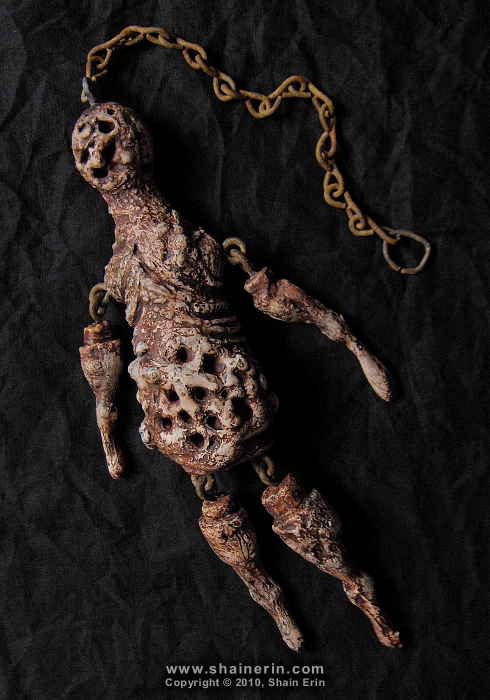
Corp Criadhach

poppet by Shain Erin

Cha dèan mi corp-criadhach dhut
 cha nochd do chruth na mo dhàin
 cha chuir meallachd mar a chuir
 na seann bhàird air luchd an gràidh
 Thogadh iad luidheag bhon ùir
 an cumadh na dùilleag bochd
 ga milleadh is boinnean bùirn
 a’ sileadh ’s drùidhteadh tron chorp.
’S ann leatsa tha d’ àileachd fhèin
’s i gun fheum air m’ fhaclan fann
 gus a toirt don aimsir chèin
 ann an caint bhreugach gach rainn.
Chan fhalaich mi d’ ìomhaigh òr
 cha mhair seo ach mairidh i
 bheir mi air ais thugad beò
 do dhealbh; cum, a stòr, do bhith.
 
                 *********
I will not make you a clay-corpse,
 your shape will not find itself in my poems;
 Bards of old praised the ones they loved;
 I will not put such a cursed blessing upon you.
They hoisted a doll of rags from the ground,
 a mirage of a wretched girl
 being destroyed by drops of water,
 washing through and penetrating the corpse.
Your beauty is yours to command;
 my words of vanity, echoing
 with the false language of each stanza,
 cannot preserve it for posterity.
I will not hide your golden image –
this will not endure, but it will –
I will bring it back to you, your shape;
 Beloved, keep your life.
 
 
Over the last little while I have been looking into the historical use and folk references to the use of a corp criadhach in the hopes of finding out more for my own personal practice. Essentially, a corp criadhach or clay corpse/clay body is a Scottish variant of a poppet.
 
I have been working with poppets for a good while now for healing and other beneficial magic, but I have only come across one source that mentions them being used in love magic. For the most part in Scottish folk magic at least, they were used for more sinister purposes.
 
"Clay corpse. When a witch desired to destroy any one to whom she had an ill-will, she often made a corpse of clay resembling the unfortunate one and placed it in some out-of-the-way burn under a precipice, in such a way that the water trickled slowly on it. As the clay body wasted so the live body of the person it resembled was also supposed to waste away. Were the body found, it was carefully preserved and so the spell of the witch was broken. Sometimes pins were stuck in the clay body to make the death of the doomed one more painful. Several such bodies have been found, even of late years."
John Gregorson Campbell also mentions as a material being used in Witchcraft & Second Sight in the Highlands & Islands of Scotland. In the Lowlands of Scotland the corp criadhach was melted slowly by a fire, with the intention of causing a victim to suffer a slow and painful death.
 
In Perthshire a piece of wood stuck with pins was used against a minister. The out come was, "burning pains all over his body, and was slowly wasting away by some malady of which the nature could not be understood." Eventually the piece of wood was dug up by a woman who snuck up on the culprit while she was burying it, and once the pins were removed from the wood, the minister is said to have recovered. {Witchcraft & Second Sight in the Highlands & Islands of Scotland}
 
Another case is of Lady Fowlis {Catherine Ross} was indicted of witchcraft after she was accused of seeking the services of witches to create likenesses of her victims, fashioned out of clay. According to Alexander MacGregor in Highland Supersitions:
"The nature of these effigies can be explained. Such as were intended to be doomed, or destroyed, were formed out of clay into hideous figures, or rude statues larger than life-size. These were called cuirp-creadha or bodies of clay. Once formed, incantations and spells were uttered over them. Pins, nails, and feathers were pierced into them, and fairy arrows darted against them, with fearful oaths and imprecations. Such things Lady Fowlis resorted to for destroying her relatives..."
Perhaps one of the most popular examples can be found in Letters on Demonology and Witchcraft by Walter Scott, referencing the case of Isobel Gowdie:
"They devoted the male children of this gentleman (of the well-known family of Gordon of Park, I presume) to wasting illness, by the following lines, placing at the same time in the fire figures composed of clay mixed with paste, to represent the object: -- 

We put this water amongst this meal,
For long dwining and ill heal;
We put it in into the fire,
To burn them up stook and stour.
That they be burned with our will,
Like any stikkle in a kiln."
This is a practice that is reputed to have made its way over from Scotland to the "New World", at least by one person in Cape Breton, Nova Scotia, Canada in the 1800's.
 
The one reference that I can recall figures being used in Scottish folk magic for love can be found in Selected Highland Folktales by Ronald McDonald Robertson. If any of my readers happen know of any other sources, please feel free to share them with me.
 
If you understand Gàidhlig, you can head on over to the Tobar an Dualchais website to hear some neat audio stories about clay corpses {stories can be found here, here, and here.}

Sláinte!

Laurel

Tuesday, May 21, 2013

Honey Bees & the Gaels

royalty free photo
I will arise and go now, and go to Innisfree,
And a small cabin build there, of clay and wattles made;
Nine bean rows will I have there, a hive for the honey bee,
And live alone in the bee-loud glade.
 

In many cultures the honey bee is a creature that plays an important role, and this is no different in Gaelic-speaking places. After doing a bit of digging, one could easily find that the Gaels had a close relationship with their honey bees, and this is reflected in song and poetry, folklore and traditions, and even laws. This post will just touch on some of those things.
 
The utilizing of honey for culinary and healing purposes does have a deep-rooted history in Ireland, which may have been gathered in the wild before people started keeping them domestically. How far back that history goes though I am note entirely sure.

According to A Smaller Social History of Ireland by P.W. Joyce {1906}:
"From the earliest times Ireland was noted for its abundance of honey...The management of bees was universally understood; and every comfortable householder kept hives in his garden. Wild bees, too, swarmed everywhere —much more plentifully than at present, on account of the extent of woodland."
One legend credits Saint Modomnoc  of bringing honey bees to Ireland from Wales in the sixth century. In the essay The Bee, its Keeper and Produce, in Irish and other Folk Traditions by Eimear Chaomhánach it is pointed out that:
"This date of arrival is substantiated by linguistic evidence of native Irish words existing at this time (the 5th and 6th centuries); such as beach (bee), mil (honey), and miodh (mead, i.e., fermented honey served as an alcoholic beverage)." {citation credited to Bechbretha: Old Irish Law-tract on Bee-keeping edited by Fergus Kelly & Thomas Charles-Edwards}
Mead was a prized drink of ancient Irish society, so much so that its main ingredient, honey was sometimes given as tribute to kings. If the feasting hall at Tara {tech midchuarta/mead hall} is any indication, this could push the date back even further {On the Manners and Customs of the Ancient Irish by Eugene O'Curry}.

Prior to the settlement of the Gaels in Scotland, there is evidence of mead being made in the Bronze Age, found in a 1,000 BC burial in Fife. Fast forward a wee bit to the 15th century AD/CE and you find see a different kind of beekeeping in the lovely Rosslyn Chapel; workers renovating the chapel came across a 600 year old beehive that was in the roof. Apparently beehives were hidden up there so the honey would drip down onto the altar.

In Irish Brehon Law there was a tract An Bechbretha or Bee Judgements, a section of law dedicated to the affairs of beekeeping. The Bee Judgements were quite in-depth covering things such as property rights, injury, theft, and maintenance.

One of my favourite parts of the law is the sharing of honey with neighbours, since the bees would no doubt be gathering pollen from nearby gardens and fields that did not belong to the owner of the swarm. The attempt for equitable dispersal did not stop there though.

If someone had found an unclaimed swarm of bees on in someone else's meadow, they could get one quarter of the honey and the property owner would get the remaining amount; if found in a tree in the same circumstance, the finder and owner would get half each. If someone had found a swarm on communal land, they could keep both the bees and honey, giving a one ninth tribute to the tribe leader {A Smaller Social History of Ireland by P.W. Joyce}.

Should a person come by some bees or honey by more dishonest means, they would be penalized. In the case of beehives being raided, Ancient Laws and Institutes of Ireland Vol 1 says that the thief would have had to pay double the value or honour price.

No doubt bees were prized commodities, and not just for getting merry with mead. Besides their honey being used in various recipes and their wax used for moulds and candles, both were valued in healing.

Some examples from the Scottish Highlands of how beeswax and honey were applied in healing can be found in Healing Threads by Mary Beith. Beeswax was a favoured ingredient for making healing ointments and plasters, while honey would sometimes be infused or mixed with herbs for both internal and external use.

Dock roots were boiled and mixed with beeswax and butter to make a healing ointment, and one apparently popular plaster was a combination pine resin, pig fat and beeswax. Ox-eyed daisy infused honey was used for both coughs and wounds and honey-sweetened ground ivy tea was drank to treat coughs and consumption.


royalty free photo
I have come across quite a few sources that talk about the importance of telling the bees of any significant news going on within a family or household, including a birth, wedding, and especially a death. The point of this was apparently to keep bees from feeling offended, because should a household fail to inform the bees, they were said to abandon their hives. This is a tradition that seems to be rooted in both Ireland and Scotland.
 
From Ireland there is one account of a gentleman making sure his was washed, shaved and wearing his "Sunday best", as if he was heading on over to church before giving his bees the news that his mother had passed away. In Scotland some folks would "put the bees into mourning" by tying black ribbons on the hives after passing on the news of a death {Scottish Customs from Cradle to Grave by Margaret Bennett}.
 
In the Isle of Man children or their parents would make bumbee cages to catch bumblebees. The bees were thought to be wayward fairies or lost souls that the children should pray for. While the children slept, parents would release the bee and put a pebble in place of it. When the children rose in the morning they would see that the bee was no longer there and that their "prayers had been answered" or that the bumbee had "learned its lesson" and was turned back into a fairy, free in the world again.
 
To attract a swarm of bees into a hive, there is one recorded Irish method that I am aware of found in Ancient Legends, Mystic Charms, and Superstitions of Ireland by Francesca Speranza Wilde:
"Gather foxglove, raspberry leaves, wild marjorum, mint, camomile, and valerian; mix them with butter made on May Day, and let the herbs also be gathered on May Day. Boil them all together with honey; then rub the vessel into which the bees should gather, both inside and out, with the mixture; place it in the middle of a tree, and the bees will soon come. Foxglove or "fairy fingers" is called "the great herb" from its wondrous properties."
 {In a previous post I have shared an augmented version of this that I use that can be found here.}

Once you have drawn in your bees and harvested your honey, you should give these lovely Irish Mead and Scottish Heather Ale recipes a try!
 
Sláinte!

Laurel

Sunday, April 28, 2013

As Bealtaine Approaches

{altered royalty free photo}

I thought that I would do a quick post sharing some resources and ideas since Bealtaine is just a few days off.
 
A few years back I did a post on Bealtaine and May Day over at the nefaeria blog, going over some of the history and lore, as well as some recipes, prayers and other celebration ideas. The Tairis website has two fantastic pages with information on Bealtaine {part one, part two} as well as a webpage dedicated to ideas on traditional ways to observe the festival. As well, the Celtic Reconstructionist group Tuacondate shares their 2010 Bealtaine ritual on their website.
 
To get things started you could make a May bush and on the eve of Bealtaine decorate your home with green boughs and flowers. I have seen a few sources mention yellow flowers being a traditional choice, so you may decide to go with dandelions, woodbine/European honeysuckle, buttercups, cowslips or primroses. I also like to decorate with periwinkles, lady's mantle, daisies, sweet woodruff, ferns and other pretties that are further along this time of year. For bough cutting choices you may want to try hawthorn, rowan, ivy, elder {although some have historically thought that it was bad luck to bring elder into the home}, juniper, and blackberry. Some good possible substitutes for my particular region could be raspberry, Virginia creeper, forsythia, cedar, dogwood, chokecherry or crab apple.
 
Fire tends to be one of the first things people think of when it comes to Bealtaine, which is the focus of many different activities, including jumping over the bonfire, the ritual smothering and relighting of the hearth {with a communal flame}, and driving livestock between two bonfires for blessings and protection. Should you have the means, lighting a bonfire on Bealtaine Eve could be a great way to kick things off. I do not have a fireplace, so what I like to do is take my "hearth candle" and extinguish it and light a new one that I made for the upcoming year. If doing this idea in a group ritual setting, each person/household could have their own candle, which could be lit from the central one to represent the re-lighting with the communal flame.
 
Before sunrise on Bealtaine morning I will go out and collect dew and rainwater should there be any, to keep for various uses in the upcoming year. Later on I will usually also get the first "cream" from a friend's well for the same purpose.
 
If the weather is agreeable, I think that spending a good part of the day outdoors is a great way to celebrate. This time could be used to bless your garden, fields, livestock or to go out and collect rowan wood, as this was apparently the only time that it was proper to collect it to the Gaels.
 
For inside the house, it is a good time to sain/bless your home and hang rowan and red thread crosses. There are many different recipes appropriate for Bealtaine, and if you are feeling really adventurous, you could have a go at churning your own butter.
 
 
Sláinte!
 
Laurel

Thursday, April 18, 2013

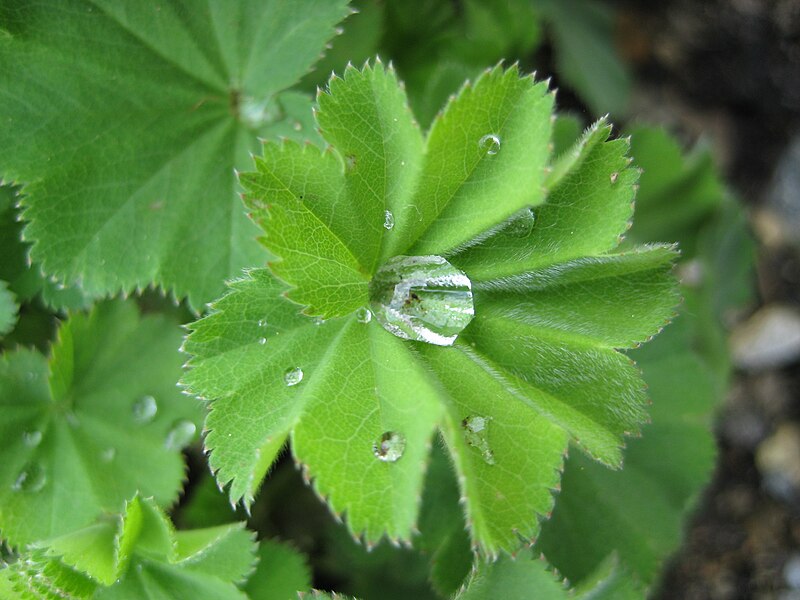
Lady's Mantle {Alchemilla vulgaris}


Photo from Jina Lee
Our Lady's Mantle ! When I musing stray
In leafy June along the mossy sward,
No flower that blooms more fixes my regard
Than thy green leaf, though simple its array;
For thou to me art as some minstrel's lay,
Depicting manners of the olden time,
When on Inch Cailliach's isle the convent chime
Summoned to Vespers at the close of day.
Tis pleasant 'mid the never-ending strife
Of this too busy, mammon-loving age,
When Nature's gentler charms so few engage,
To muse at leisure on the quiet life
Of earlier days, when every humble flower
Was known to all, and cherished as a dower.


~To Our Lady's Mantle from Sonnets and Miscellaneous Poems By James Inglis, 1853

Other Names: Common Lady's Mantle, Lion's Foot, Copan an Druichd, Bear's Foot, Falluing Mhuire,  Nine Hooks, Frauenmantle, Pied-de-lion.


Description: Lady's mantle is a lovely perennial that is a member of the rosaceae family. It can be found growing in the wild in England, Scotland, Canada, Greenland, and in much of Northern Europe and Asia.

It could be described as a demure plant, but as Ms Grieve said 'the rich form of its foliage and the beautiful shape of its clustering blossoms make it worthy of notice'.
From Wikimedia Commons
It is a low growing plant that doesn't grow to much more than 14 inches in height, and it has pretty yellowish-green flowers free of petals. It's prize feature is the wonderfully 'scalloped' leaves, which is said to resemble the Virgin Mary's cloak, from which it gets its name.

Warnings: As with all herbs, one should make sure to be thoroughly informed before ingesting them, and is best to do so under the guidance of a qualified healer.

Lady's mantle has reportedly been linked with liver damage in some cases, and many herbalists warn to women notify their health practitioner if they are pregnant or breastfeeding before ingesting the herb.

Cultivating: The natural habitat of lady's mantle is quite vast from meadows, sunny woodlands, by streams and other moist areas, as well as mountainous regions. It is a plant that does well in cooler climates and is generally thought to be suitable for hardiness zones 3 to 7.

Growing it from seed can be sometimes difficult, so it might be easier just to by seedlings or plants from a nursery. If you are going to grow it from seed, just keep in mind that it is quite slow to germinate.

Plant in the spring once there is no more chance of frost, in a spot that is anywhere from full sun to partial shade. It will do well in just about any type of soil, just make sure it is well-drained.

Mulching is a good idea, but lady's mantle is apparently quite drought-resistant. Also keep in mind that if it is doing well, it will drop plenty of seeds and spread, so you can always dead head the flowers if you want to have some control over this.

Some other plants that looks beautiful growing with lady's mantle are poppy, iris, fleabane, phlox, lily, and catmint.

Medicinal/Remedial Properties and Lore: Astringent, anti-inflammatory, diuretic, emmenagogue, febrifuge, sedative, styptic, tonic, vulnerary.

Lady's mantle has a long history of use for healing an assortment of ailments: from wounds and bruises, to vomiting and other stomach problems, as well as women's complaints.

One of the most interesting recommendations I found was from good old Culpeper who said, 'such women that have large breasts, causing them to grow less and hard, being both drank and outwordly applied'.

He also suggested its use for women who wished to conceive by drinking a tea, and claimed that it was great for wounds 'green, not suffering any corruption to remain behind, and cures all old sores, though fistulois and hollow'.

Onto Brother Aloysius, who recommended it for heavy bleeding, ulcerated lungs, dysentery, consumption, and ulcers. Like Culpeper, he also mentions in its helpfulness in the boob department, but this time for 'swollen' breasts.

Susun Weed proposes a tincture of fresh root as 'an excellent blood coagulant' and advocates its use for all types of 'female problems' {Wise Woman Herbal for the Childbearing Year}.

I can attest the helpfulness of lady's mantle when it comes to PMS and periods; I like making a tea with it paired with lemon balm {also great for these issues} because it does taste a little bitter and lemon balm has a more pleasant taste.


Photo from Aconcagua
Magical Properties and Lore:

The Latin name Alchemilla roughly translates 'small magical one', and was a plant of Alchemists who collected the dew found on the leaves for their workings.

In the book Folk-Lore of Women by Thomas Firminger Thiselton-Dyer (1906) it is said that lady's mantle 'was once in great repute with ladies; for, according to Hoffman, it had the power of restoring feminine beauty, however faded, to its early freshness'. Some women would collect dew found on the leaves on Bealtaine morning for this purpose.

Associated with the Virgin Mary, as the leaves are said to resemble her mantle, I also remember hearing a story when I was younger that the leaves were used as cloaks by the Good Folk.
 
Because of its use in women's health and healing, I have come to associate lady's mantle with the Goddesses Brigid {there is speculation by some folks that it is a herb historically tied to her} and Airmid.
 
According to some lady's mantle is connected to the planet and Goddess Venus, as well as other fertility, and Earth Goddesses. In some Swedish {and other Northern European traditions} it is placed under a woman's pillow if she wishes to dream of her future children; if worn in her hair during sex she would certainly become with child.

It was thought to ward off storms in Eastern Europe by burning it in a fire and letting the smoke go to the sky, or by hanging in windows and doors a farm would be kept safe from Nature's wrath.

In Polish-American Folklore by Deborah Anders Silverman she says that small wreaths of various types of herbs including lady's mantle are hung in homes to ward off evil spirits.
 
This is a herb that I like to use in tealeaf readings when the topic is one of love involving women {romantic, family, or platonic} and fertility of all types. I also think it is a splendid herb for love workings and for decorating on Bealtaine and Midsummer.

Other Uses:
The young leaves of lady's mantle are edible and can be served up raw or cooked, and the roots are also edible cooked.

It can also be used in beauty treatments! Below are some links to a few nifty recipes for you to try:

Hand lotion, facial steam, and bath vinegar

Hand mask

Sláinte!

Laurel

Saturday, January 5, 2013

Spiritual Land Stewardship

Restoule, Ontario
For those of us magical practitioners and Pagans that work closely with the land and nature allies, we are likely to also be passionate about conversation and environmental issues. We may be members of environmental groups, grow some of our own food, buy local and organic, and take other steps to tread lightly as possible; others may feel that they are obliged to protect certain ecologically sensitive and sacred areas through more spiritual means.

Over the last little while I have been happy to note that there are others in my region who act as spiritual land stewards or are interested in doing so. With that in mind, I thought that I would share some resources that I have found very helpful, as well as a few posts that I have done in the past that might give folks some ideas.

Some of these resources are specific to my region, while some are for any region. I also think that any of the resources of a spiritual nature could be adaptable to just about any faith or magical practice.

Books

Animal Tracks of Ontario by Ian Sheldon
Art of Conversation With the Genius Loci by Barry Patterson {I don't agree with all of this book, but I think that it is still worth a read}
At Home in Nature: Modern Homesteading and Spiritual Practice in America by Rebecca Kneale Gould
Birds by Roger Tory Peterson 
Discovering Rock Art in Ontario's Provincial Parks by Thor Conway 
Mammals of Ontario by Tamara Eder
Mushrooms of Ontario and Eastern Canada by George Barron
Native Trees of Canada
Old Man's Garden by Annora Brown
Ontario Weeds: Descriptions, Illustrations and Keys to Their Identification
Ontario Wildflowers: 101 Wayside Flowers by Linda Kershaw
The Book of Swamp and Bog by John Eastman
The Forest Trees of Ontario by J.H. White
The Woodland Way: A Permaculture Approach to Woodland Management

Articles
 Websites
If you know of any resources that are not on here, please feel free to share them in the comment section. :)

Sláinte!

Laurel

Thursday, December 20, 2012

The Herb-Leech


I have gathered luss {foxglove}
At the wane of the moon,
And supped its sap
With a yewen spoon.
I set a spell
By the carn of Medb,
And smelt the mould
Of the red queen's grave.
I have dreamed a dearth
In the darkened sun,
And felt the hand
Of the Evil One.
I have fathomed war
In the comet's tail,
And heard the crying
Of Gall and Gael.
I have seen the spume
On the dead priest's lips,
And the "holy fire"
On the spars of ships;
And the shooting stars
On Barthelmy's Night
Blanching the dark
With ghostly light;
And the corpse-candle
Of the seer's dream,
Bigger the girth
Than a weaver's beam;
And the shy hearth-fairies
About the grate,
Blowing the turves
To a whiter heat.
All things on earth
To me are known,
For I have the gift
Of the Murrain Stone!

~The Herb-Leech by Seosamh Mac Cathmhaoil {Joseph Campbell}

Tuesday, December 18, 2012

Yuletide

my little Norfolk Island pine decorated last year
I figured that I would get this up before I start the whirlwind of cleaning, decorating and baking that needs to be done. This post is just to share some Yuletide recipes, ideas, going-ons and reading. Please feel free to share you own in the comment section!
 
For the last few years Midwinter and Christmas are mostlu secular celebrations for me, but I still do enjoy the season. The one real exception to this is a newly adopted tradition of making a Midwinter feast for Ancestors who are no longer here to sit at the table with us. Last year I was inspired by Ms Graveyard Dirt, who put out a Holy Supper Challenge and she is doing so again this year, which I recommend folks to join in!
 
This year for the Winter Solstice I will make offerings to a new deity that I am getting to know {a post about that still to come!} and start some heather seeds that I got from a lovely friend in Cornwall, on a recommendation found on the Alchemy Works website. I will also be keeping an eye on the illuminations of both Newgrange and Maeshowe, which can be viewed on webcasts. And perhaps pining a wee bit that I will be missing the celebrations at the Kensington Market Festival of Lights.
 
I still haven't done any decorating, so one of the things that I have to do is deck my little Norfolk Island pine. Last year I cut out a bunch of woodland critters to put on it, which you can see more about here and perhaps gets some ideas. If you are looking for more Christmas tree ideas, you should go read Carolina Gonzalez's article A Very Magical Christmas Tree, her tree is fantastic!
 
There is plenty of cooking and baking to be done here yet, too. Here are a few recipes that I have enjoyed:
 
 
Should you find some time for reading, here are links to posts and articles that you might find interesting:
 
Yule & Hogmanay Part 1 and Part 2 from Tairis
 
And should you have even more spare time, here is a great movie called Mummers, Masks and Mischief about mummering and guising in Ireland.


Sláinte!
 
Laurel

Sunday, December 9, 2012

European Mistletoe {Viscum Album}

{originally posted on the nefaeria blog in 2008, with a wee bit of updating}

photo by Rupert Ganzer
Along with conifers, poinsettias and holly, mistletoe is one of the plants most associated with the Yuletide season, so it is a perfect time to post about it I think.

There are other types of mistletoe, but for this post, I am focusing on the European or Common variety.

Other Names: Herbe de la Croix, All-Heal, Birdlime, Devil's Fuge, Mistletan.
 
Description: The European mistletoe is native to Britain, as well as to much of Europe. It is a hemiparastic evergreen that lives in mostly deciduous trees, and is compatible with at least 200 different host species.
 
It forms 'bushes' on the branches of trees, that are anywhere from 1.5 to 6 feet in diameter. The leaves are shaped like a tongue and they have white, round berries whose sticky juices have been noted to resemble semen.
 
Warnings: As with all herbs, one should make sure to be thoroughly informed before ingesting them, and is best to do so under the guidance of a qualified healer.
 
"Raw, unprocessed mistletoe is poisonous. Eating raw, unprocessed European mistletoe or American mistletoe can cause vomiting, seizures, a slowing of the heart rate, and even death." 
As well, they point out that in countries such as Germany have mistletoe that is available for therapeutic injection. There are potential side effects such as
"itching or redness in the area of the injection. Less commonly, side effects may include more extensive skin reactions, low-grade fevers, or flu-like symptoms. There have been very rare reports of more serious allergic reactions, such as difficulty breathing.'"
Also, avoid while pregnant, as it is known to cause contractions of the uterus.
 
Cultivating: Germination for the mistletoe usually begins once a bird's business is dropped on a its new host; the seeds sprout from the pile of bird poop, and then takes root in the bark of the tree.
 
The mistletoe mainly uses its host as a source of water and mineral nutrients, while its leaves do some photosynthesis. It usually bears fruit around the Winter Solstice.
 
According to Mrs. M Grieve, one could quite easily cultivate their own mistletoe simply by
"rubbing the berries on the smooth bark of the underside of the branches of trees till they adhere, or inserting them in clefts made for the purpose".
It is hardy to about a zone 5, and grows best in dappled shade. Brother Aloysius suggests that it be gathered in Autumn or Winter and that it should be dried and stored in sealed containers.
 
Medicinal/Remedial Properties and Lore: Antispasmodic, cardiac, cytostatic, diuretic, emmengogue, haemostat, hypotensive, narcotic, nervine, stimulant, tonic, vasodilator.
 
Culpeper said that
"misselto doth molify hard knots, tumours, and imposthumes...is a cephalic and nervine medicine, useful for convulsive fits, palsy, and vertigo."
Brother Aloysius recommended it for a variety of ailments including watery gall, jaundice, internal sores, convulsions and whopping cough.
 
Today mistletoe is mainly used for headaches, to lower blood pressure, to relieve anxiety and sleeplessness, and there are studies being done in it's effectiveness in combating cancer.
 
a holiday postcard, circa 1900
Magical/Spiritual Properties and Lore: It is said that Cesar saw Druids five days after the new moon following the Winter Solstice, climbing into oak trees and cutting mistletoe with golden sickles for ritual use. There are disagreements as to whether it was actually mistletoe or holly that they were cutting down.
 
According to Paul Beyerl's Master Book of Herbalism mistletoe is good for fertility, protection and visionary workings. For a Yule ritual in his book, people should toss a mistletoe berry into the hearth-fire to represent those personal things that one desires, as the sun comes back.
 
In some traditions, mistletoe is associated with solar deities because it bears fruit as the sun it at it's lowest point , and also lunar deities because of it's round, white fruit.
 
Once gathered, many sources say that it should not touch the ground, and it does indeed have many potential uses.
 
For protection, in Culpeper's Complete Herbal, he says that is can be hung around the neck to remedy witchcraft. Also, sprigs can be hung on doorways to protect houses from lightening and evil spirits; it can be placed by a cradle to avoid faeries {careful that little hands can't reach it!}; hung in a barn to protect a herd of cattle and buried in a field to protect a crop.
 
For this time of year, string up some mistletoe to get some kisses ;)
 
Where this custom actually originated from I am not sure, but there are a few that I have seen:
 
One involves the Norse God Baldr, who is killed by an arrow made of mistletoe, that is shot by Loki. After Baldr dies, Frigg cries and her tears become the white berries. In one version of the story, Baldr comes back to life, and Frigg is so happy that she blesses the mistletoe and says she will bestow a kiss to anyone who stands underneath it.
 
Under the Mistletoe, 1873
Another folktale says that if warring foes came under a tree with mistletoe on it, they would lay down their arms and kiss each other as a sign of peace.
 
I use mistletoe for various types of workings, including ones for protection, health/healing, divination, exorcism, fertility, romance, sexuality, and activities in the wild {hunting, camping, wildcrafting}.
 
Other Uses: It has long been thought that mistletoe is just a pest that not only kills off trees, but degrades entire habitats. But, according to a study done on the relationship between junipers and mistletoe, the mistletoe can actually play a role in protecting biodiversity.
 
Sláinte!
 
Laurel