Showing posts with label incense. Show all posts

Sunday, December 2, 2012

Incense Additions, Round Two

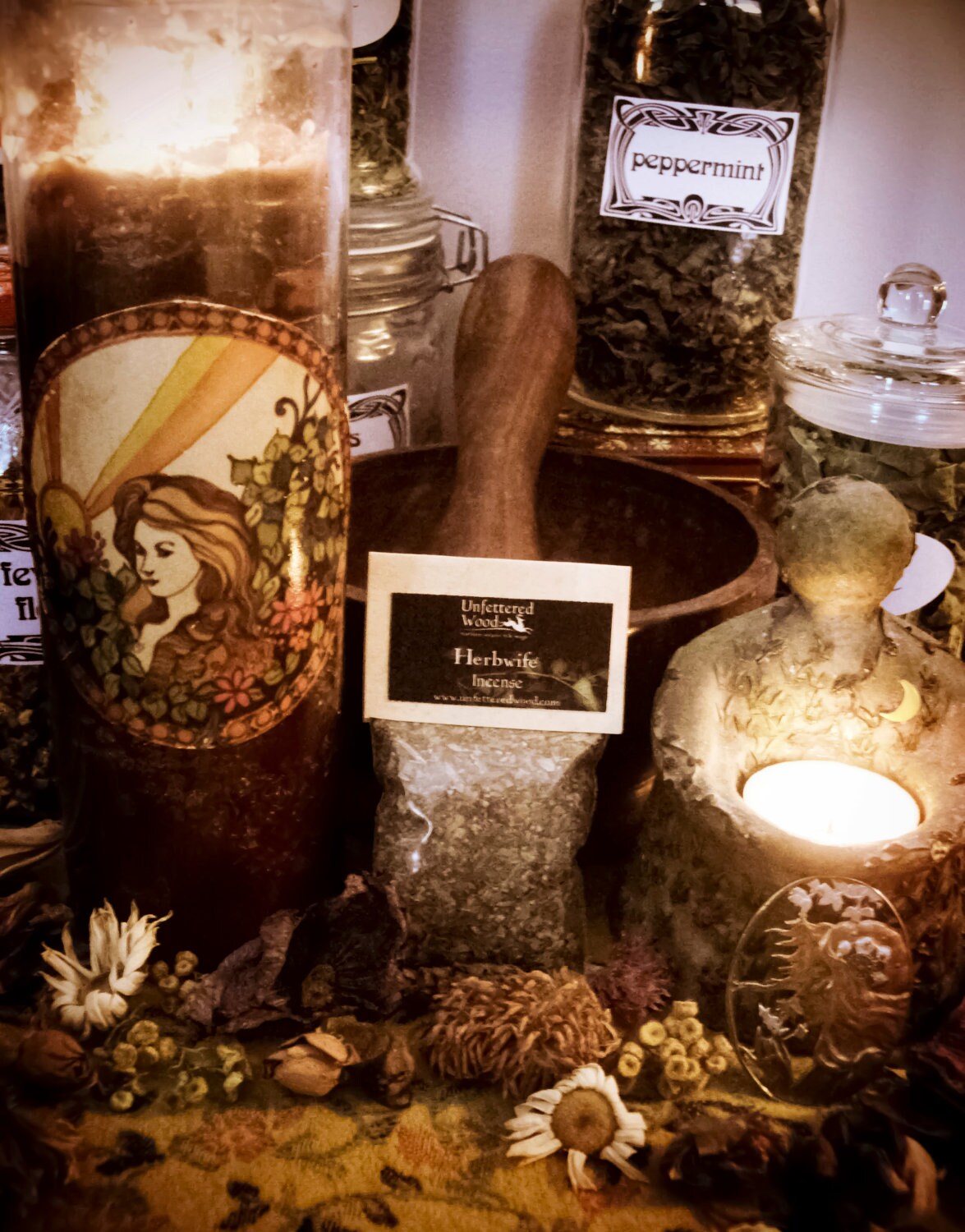
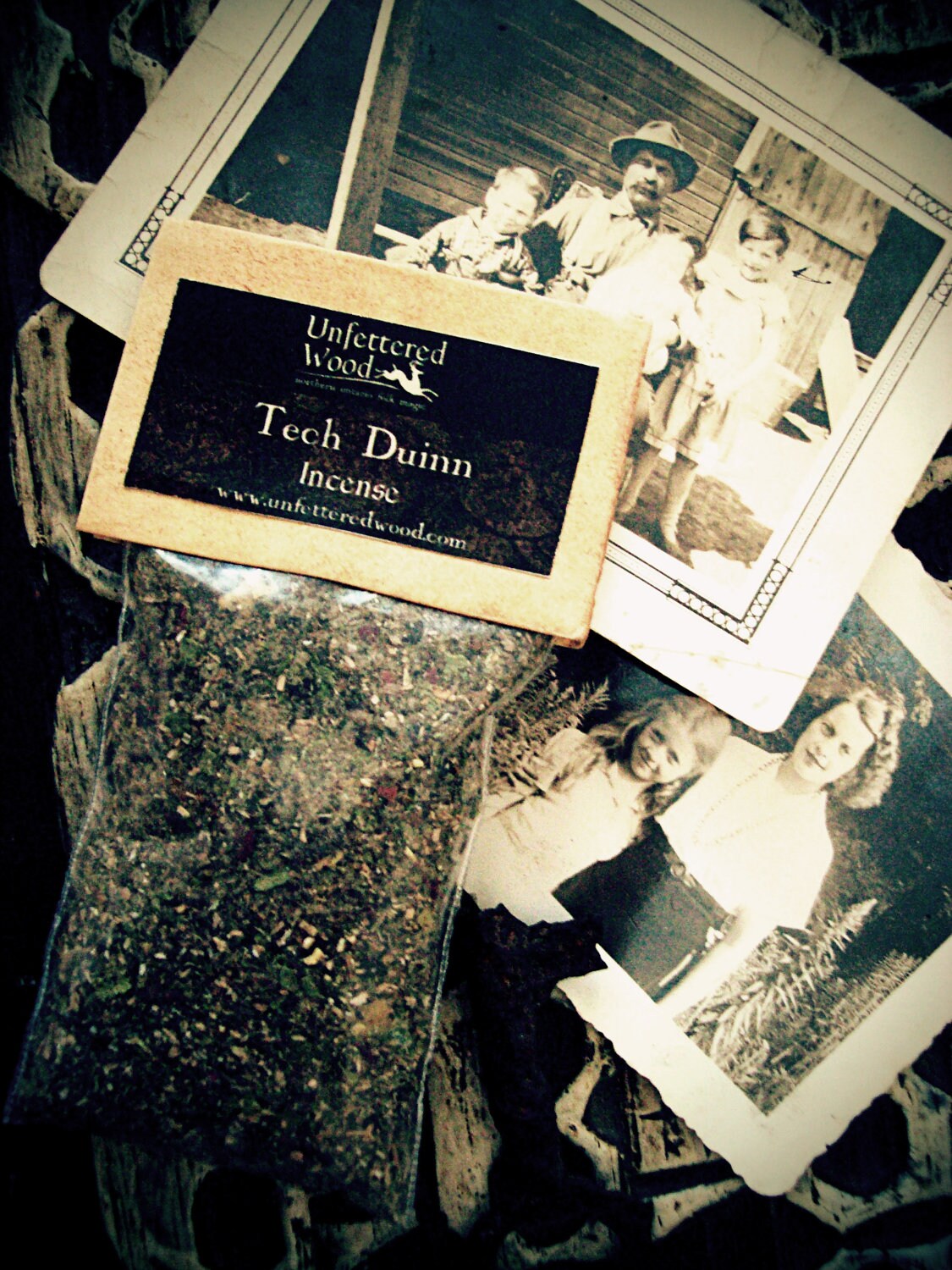
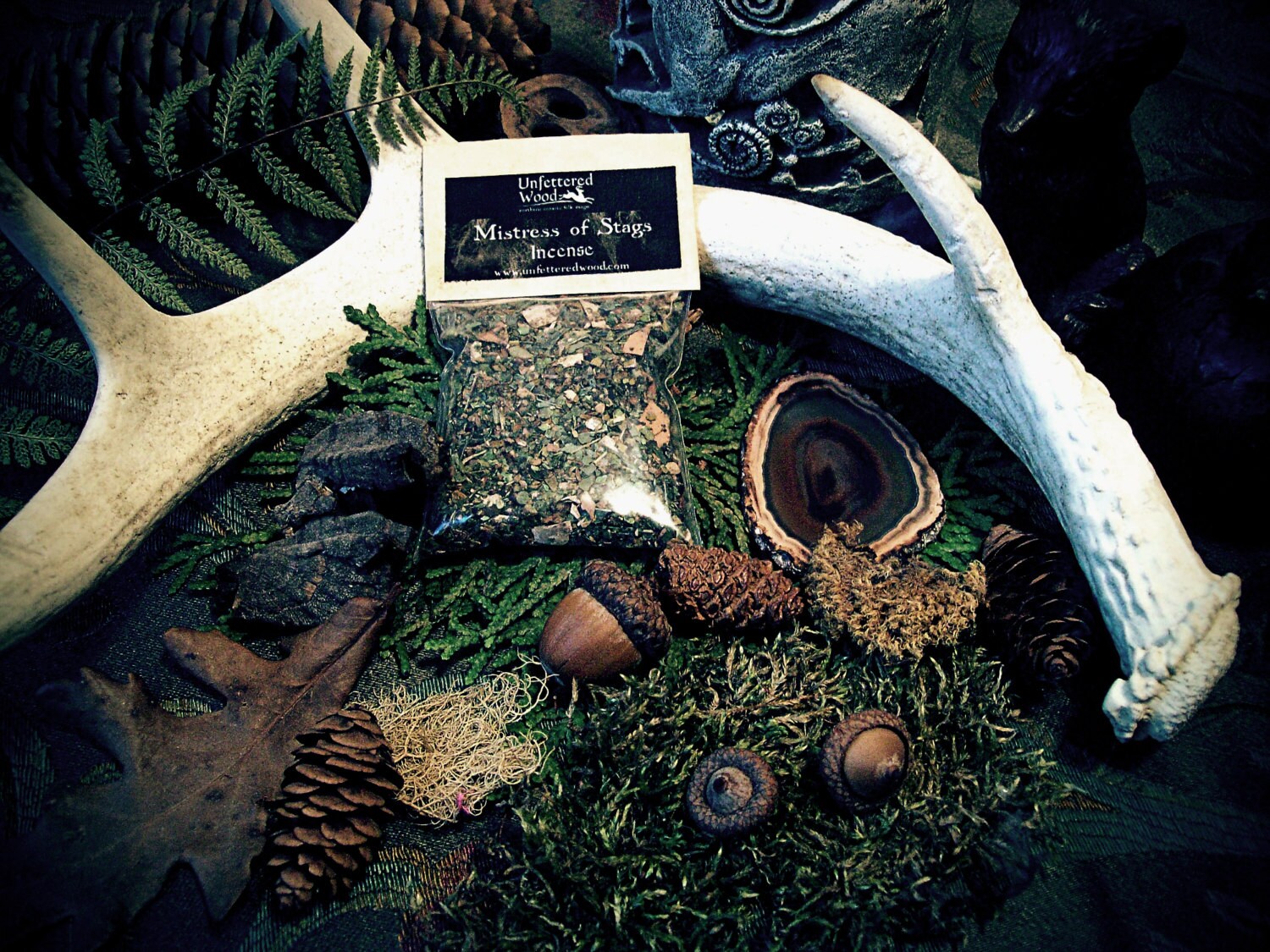
I have recently added three more incense to the Unfettered Wood Etsy shop. The newest additions are:


For herbcrafting and healing, and as an offering to Airmid.


For Samhain and necromancy rituals, and as an offering to Ancestors and Donn.


For workings involving woodlands, lust and sexuality, and wild animals, also for Bealtaine rituals and as an offering to Flidais and spirits of the forest.
 
*********
 
There are a few more blends that I use in my practice that I may make available for sale sometime in the near future.
 
Sláinte!
 
Laurel


Friday, November 23, 2012

Incense Additions, Round One

I have finally put a few incense into the Unfettered Wood shop and there are still quite a few more waiting to be added. Right now I have...


For physical journeys and spiritual ones, including dream work, hedgecrossing, and other travels in the spirit realms.


For divination, sorcery, battles, and as an offering to Macha, and perhaps An Morrígan.


For Imbolc, hearthcraft, creativity, smithing, poetry, women’s sexual healing, blessings of dairy and livestock, and as an offering to Brigid {Goddess or Saint}.


For Lughnasadh, harvest blessings and other agricultural activities, fertility, abundance, horse allies and as an offering to Macha.
 
********* 


Sláinte!

Laurel

Sunday, August 12, 2012

A Good Start to the First Harvest

mixed grain loaf
Things have been quite busy around here the last few weeks, but thankfully I have had time to celebrate Lughnasadh and have been able to spend a lot of time in our garden.

Just like with the other cross quarter days I observe Lughnasadh over a period of a few weeks instead of just a day or two. While mostly associated with a time to honour Lugh and Tailtiu {and I do honour Them as well}, my main personal focus at this time is Macha.

One of the rituals I like to do around Lughnasadh is a reaping blessing, which as you can see below from my adaptation of a reaping blessing from Carmina Gadelica is traditionally done on a Tuesday. Lughnasadh Eve fell on a Tuesday this year, which is when I originally wanted to do it. Unfortunately the weather was really shoddy that day; stuck indoors, I setup our seasonal altar on Lughnasadh Eve.


Lughnasadh morning I ended up carrying out the reaping blessing the next day, along with a nice harvest.


On Tuesday of the feast at the rise of the sun,
And the back of the bountiful fruits to the east,
I will go forth with my basket under my arm,
And I will pluck up the fruit.
While the harvested fruit is in my grasp,
I will raise mine eye upwards,
I will turn me on my heel quickly,
Rightway as travels the sun
From the airt of the east to the west,
From the airt of the north with motion calm
To the very core of the airt of the south.
I will give thanks to the Hosts of grace
For the growing crops of the ground,
They will give food to ourselves and to the Tribe
According as They disposeth to us.
Macha, Airmid, Flidais and Bride,
Gods, Ancestors, and Nature Spirits kind.

blue jay bush bean harvest
The rest of the day was spent baking bread and making a yummy dinner and offering rituals in the evening.


A few days later I made more offering incense for Macha as the ingredients had become available once again. One of the blends I created is burnt in thanks for the bounty of the fields, blessing of the harvest, and for abundance in general; the other blend is for divination, magical workings, connecting with the dead and for battles. These two blend will be among the incense I will have available in the store.

Once more crops begin to ripen in our garden, we will then have our "big" Lughnasadh feast which will close things up. To see how our garden is doing, you can go check out a recent post over at my other blog.

Sláinte!

Laurel

Saturday, July 28, 2012

Smudge Sticks, Dream Catchers, Etc.

I have had a few people request that I make smudge sticks and dream catchers for them, so I figured that I would post this publicly to curb any future disappointments. Both of these are part of traditional cultures of some Indigenous peoples from here on Turtle Island, and I don't think it is my place to make and sell them.

For those who work with and honour local spirits, I will be making a loose incense available that I use to make offerings in my own practice. Some will be available once all of the ingredients are ready.

In regards to cultural appropriation I have some pretty strong opinions, but I will leave that for another day.

Sláinte!

Laurel

Monday, May 28, 2012

Incense Making

Yesterday I spent a couple of hours making incense that I use in offerings. One blend is for Airmid which has a green, pungent and floral scent, and the other is for Flidais that smells of a wild and lusty woodland.

Wednesday, April 11, 2012

Plants for the Dying & Deceased


Der Tod by Hans Baluschek, 1895
Listed below are herbs that are associated with death and that can be used in rituals surrounding death. This is comprised of lore that I found in Paul Beyerl's Master Book of Herbalism and Selena Fox's Funeral Herbs and lore that I have gathered from advice of others over time.

As always, please do not ingest any herbs without being fully informed, and under the guidance of a qualified healer.

Sláinte!

Laurel

ACONITE is a VERY POISONOUS herb, and should only be administered by a qualified healer. It has been used to help the dying (at the time of death) transition comfortably to the stage after death. It can be planted on a burial, and used in an incense in ritual. The roots can be placed on an ancestor altar, especially around Samhain.

ANEMONE can be used in a ritual fire after the deceased has past over to encourage reincarnation.

ASPHODEL has traditionally grown on graves and washing the corpse. Gather in a bunch and tie in a red ribbon to aspurge the body in ritual.

BASIL is associated with love and protection, and is excellent to be used in an incense. It is used to help bring dignity and courage to one facing death. Can be incorporated into the ancestors' feast on Samhain.

BAY LAUREL is used for communication with the dead, and is sometimes used in funeral wreaths. Can be used in dishes for the ancestors' feast at Samhain.

BIRCH is often associated with rebirth and reincarnation. Blessings for the deceased can be written on birch bark and can then be buried or burnt with the corpse.

BLUEBELLS are planted on graves to bring peace and blessings, and may also be used to decorate the altar at the funeral, or on Samhain.

CHERVIL can be drank to aid one to in rituals of communing with the dead.

COMFREY is a helpful herb to help one get over the loss of a loved one. Excellent to plant in the garden in memorial of the deceased.

CYPRESS is associated with endings. Can be used to ritually bathe the body of the deceased.

ELDER is an excellent wood for a cremation pyre, or a sprig of elder can be buried with the deceased. Elderberries are excellent to decorate the funeral altar, or the altar at Samhain.

FRANKINCENSE can be burned at the funeral ritual, or in ritual while communing with the dead for purification, and spiritual transformation.

GARLIC is used for protection, and can be put on a grave, and cooked in dishes for the ancestors' feast at Samhain.

HOLLY is associated with resurrection and renewal, and can be buried with the deceased or used to decorate the funeral altar.

IVY can be planted at a grave to celebrate the life of the deceased and to encourage rebirth.

LAVENDER should be planted in memory of the deceased either on the grave or in the home of a living loved one to bring peace.

LEMON BALM is associated with immortality and happiness, and can be drank in a tea to lift spirits of the mourning.

LILY can be planted on a grave to represent resurrection.

LOTUS pods can be used as an incense burner to aid the soul seeking reincarnation.

MANDRAKE root can be buried with the body to protect the spirit and send it safely on its way. It also can be used to decorate the ancestor altar at Samhain.

MARJORAM can be planted on a grave and used in the ancestors' feast at Samhain.

MINT can be used as a strewing herb to bring joy to the mourning.

MISTLETOE can be buried with the deceased for protection.

MUGWORT can be drank by the dying to gain inner sight.

MULLEIN can be used to cleanse the body of the deceased.

MYRRH was once used in embalming, but can now be used as an incense at the funeral to bring healing, purification, and protection.

OAK is a tree of strength, and is an excellent pick to plant in the memory of the deceased.

PARSLEY can be strewn on the path of where the body is being transported, and can be planted at the grave site for good luck in the after life.

PENNYROYAL is used to bathe the corpse to assist in the soul being reborn.

PERIWINKLE is a herb of immortality and can be used in a funeral wreath or used to decorate tombs. Often used in the passing of children.

POMEGRANATE can be eaten at the ancestors feast on Samhain to represent rebirth.

POPPY can be used in funeral wreaths or planted at a grave site to bring restfulness to the deceased.

ROSEMARY can be thrown into grave sites, carried on funeral processions, or burned as an incense. Can be used in the ancestors' feast at Samhain, especially to commune to deceased friends.

ROSES represent love and purification, and are used in funeral wreaths and planted in memory of the deceased.

ROWAN is associated with protection. The berries can be buried with the deceased or used to decorate the funeral and ancestor altar, and can be planted on a grave site.

RUE can be burnt for karmic completion.

SAGE can be used as a smudge for purification, and ingested when communing with the dead, and to bring wisdom.

SANDALWOOD is an excellent purification incense that can be used during the funeral ritual.

TANSY was once used for embalming. It can now be used to aspurge the temple and the body of the deceased, and used to decorate the ancestor altar.

THYME makes an excellent ritual cup to drink before communing with the dead, and can be used in a ritual incense or bath for purification.

VIOLETS are appropriate flowers for the graves of children.

WILLOW is said to ease the soul at the time of death if it is planted by the deceased in their lifetime. Willow baskets can be used as offering containers for ancestors.

WORMWOOD can be used as an incense for transformational healing for the mourning, or to bring insight to the dying.

YARROW can be grown on graves in in the gardens of the mourning to bring protection and healing.

YEW is associated with immortality and endings, and was often planted in graveyards to protect the bodies of the deceased.

Sláinte!

Laurel

Thursday, March 1, 2012

Sweetfern {Comptonia peregrina}


Other Names: Sweet-fern, Sweet Fern, Fern Gale, Spleenwort Bush, Sweet Ferry, Meadow Fern.

Description: The name 'Sweetfern' can be a tad bit misleading, since it is actually not a fern but a deciduous shrub. When one sees it, especially when young, it is understandable why it has 'fern' attached to its name; the foliage strongly resembles narrow fern leaves.

Sweetfern grows to about 3 feet high, its trunk is brown with a hint of red and can sometimes be quite hairy. The whole plant can smell very pleasant, especially the leaves when the are rubbed or bruised.

It is native to North America, and can be found growing in the wild from Quebec to the East, Saskatchewan in the West, to about North Carolina in the South. It is in the Myricaceae family, and the Bayberry is a close relative.

Warnings: As with all herbs, one should make sure to be thoroughly informed before ingesting them, and is best to do so under the guidance of a qualified healer.

photo by dogtooth77
Cultivating: Sweetfern can be found growing on hillsides, open fields, and in places where pine trees thrive. It does well to hardiness zone 3, and needs to be grown in full sun. It is drought resistant and prefers soil that is sandy, acidic and well-drained. It makes an excellent ground cover on land that has very poor quality soil!

You can buy plants at nurseries, but it maybe a little difficult to find. Another option is to propagate it through root cuttings, instead of seeds {unless you are up for an extreme challenge!}. Once Sweetfern has made itself at home, it needs very little upkeep and will spread very well via its rhizomes. It is a perennial and will mature around its third year.

One disease to be aware of is Sweetfern blister rust, which can also spread to various pines including Jack Pine, Scots Pine, and Ponderosa Pine.

Medicinal/Remedial Properties and Lore: Anti-inflammatory, aromatic, astringent, emollient, haemostat, stimulant, tonic.

Sweetfern has been used by both Natives and settlers to treat various different ailments. One of its most popular uses that is still appreciated today is as a tonic. All parts of the plant would be used, especially the top leaves in a tea to promote overall good health.

A decoction was used internally to treat dysentery, leucorrhea, rheumatism, diarrhoea, and internal bleeding. Henriette's Herbal recommends a dosage of from 1 to 4 fluid ounces, 3 or 4 times a day.

It is apparently quite effective when used topically to sooth Poison Ivy and other irritations, and can be used in this manner to treat rheumatism as well.

Magical/Spiritual Properties and Lore: According to Melvin Gilmore in Some Chippewa Uses of Plants,  Sweetfern was burnt as an 'incense' in religious ceremonies by some Indigenous poeple.

European settlers would sometimes use it in folk magic for love talismans and spells, and was sometimes planted in their farm fields in the hopes that some of its hardy properties would brush off on to their own crops.

photo by peganum
Other Uses: The nutlets are edible and apparently quite tasty! The leaves can be used to season foods, such as poultry or fish as well. Growing it in the garden is handy as it improves the soil by fixing the nitrogen, and is an excellent plant for wildlife. Deer, birds, and butterfly larvae will feed on Sweetfern, and birds such as grouse and killdeer will nest underneath it.

Sláinte!

Laurel