Showing posts with label paganism. Show all posts

Friday, January 17, 2014

Crafts for Imbolc

St Brigid Doll by St. Blaize

Imbolc or Lá Fhéile Bríde is just a couple of weeks away, so I thought that I would share some crafting project ideas, some of which I have been or will be doing myself.
 
Brigid's Cross/Crois Bhríde: Instructions for a traditional protective charm. You can see a video version here.
 
A Brigid Icon/Brideóg: An article about the history of the practice as well as some photos and ideas to inspire you to make your own.
 
Brigid's Bed/Leaba Bhríde: An entry in the Carmina Gadelica {volume 1} describing the practice of making and putting an icon of Brigid "to bed". There are mentions of materials to give you an idea on how to make your own.
 
A Recipe for Spring Cleaning: A herbal vinegar that I make to clean my house both spiritually and physically.
 
Collecting Cross Quarter Water: A write up of collecting water during the cross quarters {including Imbolc} and what it can be used for.
 
A Rowan & Red Thread Cross Charm for Safe Travel: Crafting that I did last year and put into a 
 
Paper Snowdrops: A neat little project for those of us who don't have this traditional Imbolc flower available to us this early in the year.
 
Hand Dipped Beeswax Candles: A great way to celebrate the returning light.
 
Highland Cow Sock Animal: One project idea, there are quite a few available online as well as kits such as this and this.
 
Sheep Craft Projects: There are a whole bunch of kid-friendly sheep crafting projects here.
 
Feel free to share any other ideas or resources in the comment section. :)
 
Sláinte!
 
Laurel


Saturday, November 30, 2013

Intentions Behind Making Offerings {Part 2}

This is a follow up to a post I did a few days ago Intentions Behind Making Offerings; there has been quite a bit of discussion over at Tumblr in response to the post over there, which showed me that there was a need for me to clarify a few things, which I am doing over here as well. You can see the discussion over at Tumblr here.
 
*********
 
 I have read all the responses and comments so far to my initial post, and I appreciate all the feedback. Before I respond to other people’s thoughts, I will reiterate that everything that I am writing here is just my own opinion, I am not representing any group or stating that these are the opinions of those who share a similar faith as my own {although I would be especially curious to hear what other Gaelic Polytheists and Celtic Reconstructionists feel on this topic}.
 
After reading the responses I have gotten and re-reading my initial post, I feel that I was not thorough enough to begin with and made some assumptions that others who would be reading my post would already know my overall position on making offerings and have a general feel of my position when it comes to relationships with deities, ancestors and spirits. To save some time in completely repeating myself, I welcome people to read the other post I had linked to here. I will however be going into further detail as necessary.
 
Something else I failed to be clear on in my initial post was what types of Pagans, polytheists and magical practitioners I was originally talking about, which were those who feel they practice some “Celtic” based or inspired faith. I have tried to find the original article that I had alluded to and unfortunately have not been able to find it on Tumblr anymore. It was called something like “Offerings Celtic Style” and was originally posted on Tumblr around July or August. If anyone remembers that post and it is still around, please feel free to share it.
 
There are people from different traditions and faiths that have responded to this, most notably people from a Kemetic path {a timely discussion is going on right now, which I recommend other people read, as it is quite interesting, which can be seen here}. I will not pretend to have even the slightest clue what it is like to deal with the Gods of people from a completely different spiritual path than my own, and it could very well be that what I consider to be bribes is perfectly acceptable to their Gods and their value-system. I am comfortable saying though that I do not think that this approach is acceptable with the deities that I have a relationship with nor is this an approach that fits into my own world view.
 
Some folks have mentioned the idea of a “gift for a gift” and someone had also used the word “reciprocity”, which I feel both encapsulate what I am trying to get at here. The spirit in which I see these terms is in complete opposition to some people who think that they can take without giving back or only give something to manipulate someone to get what they want.
 
Someone mentioned if we don’t get something back from the Gods then what is the point? Indeed. There is something I feel I get back including guidance, protection, wisdom. I may ask for something that I feel I need or ask on behalf of someone else, that does not however mean that my Gods are here to fulfill my every whim and demand.
 
Long before I start asking for things, while I am still in the early stages of developing a relationship with a deity or spirit, I will make offerings, take actions to demonstrate my intentions, to show hospitality. If and when a relationship is established, then I may ask for something.
 
While I do not pretend to be “equal”, I do espouse to treat my Gods, Ancestors and the Spirits I work with as I would someone who is dear to me. They are not here for me to use. That said, I do of course get something back for having a relationship with them. If I did not, much like a one-sided friendship, eventually ties would be severed.
 
It is difficult for me to clearly define how I see my deities, although, at least in part, I see them as mentors and kindred. If I were to have a wise person in my life teaching and guiding me, there would be an automatic amount of respect that I would have for them; anyone who I feel is my kindred, I have an automatic amount of respect for them.
 
Besides what I already get out of a relationship with a mentor or kindred, I may ask that person for a favour. The may agree to grant that favour, or they may not. I would still respect them either way and I would try to avoid manipulating them, giving them ultimatums, or bribing them as I see these things as disrespectful.
 
For me offerings are made with a generous heart; they are just one expression of the values that I see as sacred, the values that I try to uphold in every day life.
 
I hope that I have somewhat clarified my position and I welcome further comments and discussion, whether you agree or disagree.
 
Sláinte!

Laurel

Sunday, October 27, 2013

Some Samhain Crafts & Reading

royalty free photo

The dark half of the year will soon be upon! So, here is some crafting ideas and reading resources on how you can celebrate and observe the season. 
*********

Sláinte!

Laurel


Thursday, April 18, 2013

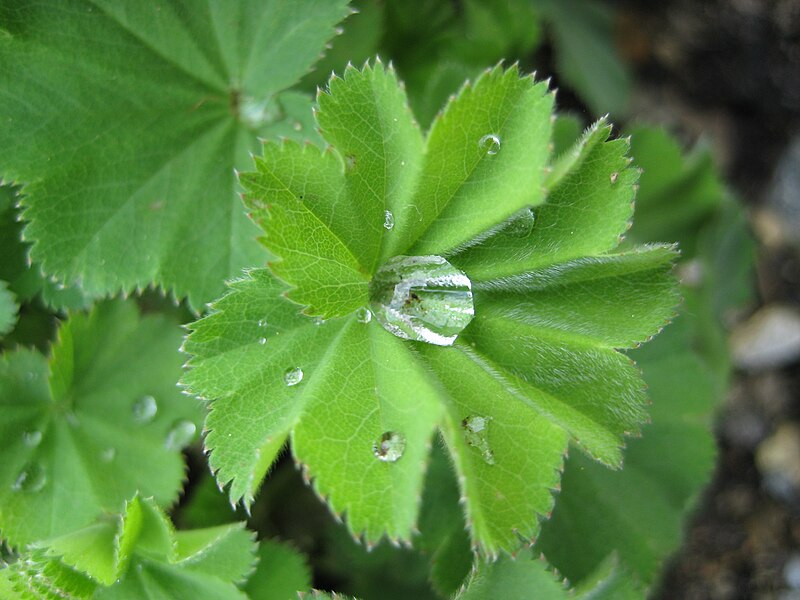
Lady's Mantle {Alchemilla vulgaris}


Photo from Jina Lee
Our Lady's Mantle ! When I musing stray
In leafy June along the mossy sward,
No flower that blooms more fixes my regard
Than thy green leaf, though simple its array;
For thou to me art as some minstrel's lay,
Depicting manners of the olden time,
When on Inch Cailliach's isle the convent chime
Summoned to Vespers at the close of day.
Tis pleasant 'mid the never-ending strife
Of this too busy, mammon-loving age,
When Nature's gentler charms so few engage,
To muse at leisure on the quiet life
Of earlier days, when every humble flower
Was known to all, and cherished as a dower.


~To Our Lady's Mantle from Sonnets and Miscellaneous Poems By James Inglis, 1853

Other Names: Common Lady's Mantle, Lion's Foot, Copan an Druichd, Bear's Foot, Falluing Mhuire,  Nine Hooks, Frauenmantle, Pied-de-lion.


Description: Lady's mantle is a lovely perennial that is a member of the rosaceae family. It can be found growing in the wild in England, Scotland, Canada, Greenland, and in much of Northern Europe and Asia.

It could be described as a demure plant, but as Ms Grieve said 'the rich form of its foliage and the beautiful shape of its clustering blossoms make it worthy of notice'.
From Wikimedia Commons
It is a low growing plant that doesn't grow to much more than 14 inches in height, and it has pretty yellowish-green flowers free of petals. It's prize feature is the wonderfully 'scalloped' leaves, which is said to resemble the Virgin Mary's cloak, from which it gets its name.

Warnings: As with all herbs, one should make sure to be thoroughly informed before ingesting them, and is best to do so under the guidance of a qualified healer.

Lady's mantle has reportedly been linked with liver damage in some cases, and many herbalists warn to women notify their health practitioner if they are pregnant or breastfeeding before ingesting the herb.

Cultivating: The natural habitat of lady's mantle is quite vast from meadows, sunny woodlands, by streams and other moist areas, as well as mountainous regions. It is a plant that does well in cooler climates and is generally thought to be suitable for hardiness zones 3 to 7.

Growing it from seed can be sometimes difficult, so it might be easier just to by seedlings or plants from a nursery. If you are going to grow it from seed, just keep in mind that it is quite slow to germinate.

Plant in the spring once there is no more chance of frost, in a spot that is anywhere from full sun to partial shade. It will do well in just about any type of soil, just make sure it is well-drained.

Mulching is a good idea, but lady's mantle is apparently quite drought-resistant. Also keep in mind that if it is doing well, it will drop plenty of seeds and spread, so you can always dead head the flowers if you want to have some control over this.

Some other plants that looks beautiful growing with lady's mantle are poppy, iris, fleabane, phlox, lily, and catmint.

Medicinal/Remedial Properties and Lore: Astringent, anti-inflammatory, diuretic, emmenagogue, febrifuge, sedative, styptic, tonic, vulnerary.

Lady's mantle has a long history of use for healing an assortment of ailments: from wounds and bruises, to vomiting and other stomach problems, as well as women's complaints.

One of the most interesting recommendations I found was from good old Culpeper who said, 'such women that have large breasts, causing them to grow less and hard, being both drank and outwordly applied'.

He also suggested its use for women who wished to conceive by drinking a tea, and claimed that it was great for wounds 'green, not suffering any corruption to remain behind, and cures all old sores, though fistulois and hollow'.

Onto Brother Aloysius, who recommended it for heavy bleeding, ulcerated lungs, dysentery, consumption, and ulcers. Like Culpeper, he also mentions in its helpfulness in the boob department, but this time for 'swollen' breasts.

Susun Weed proposes a tincture of fresh root as 'an excellent blood coagulant' and advocates its use for all types of 'female problems' {Wise Woman Herbal for the Childbearing Year}.

I can attest the helpfulness of lady's mantle when it comes to PMS and periods; I like making a tea with it paired with lemon balm {also great for these issues} because it does taste a little bitter and lemon balm has a more pleasant taste.


Photo from Aconcagua
Magical Properties and Lore:

The Latin name Alchemilla roughly translates 'small magical one', and was a plant of Alchemists who collected the dew found on the leaves for their workings.

In the book Folk-Lore of Women by Thomas Firminger Thiselton-Dyer (1906) it is said that lady's mantle 'was once in great repute with ladies; for, according to Hoffman, it had the power of restoring feminine beauty, however faded, to its early freshness'. Some women would collect dew found on the leaves on Bealtaine morning for this purpose.

Associated with the Virgin Mary, as the leaves are said to resemble her mantle, I also remember hearing a story when I was younger that the leaves were used as cloaks by the Good Folk.
 
Because of its use in women's health and healing, I have come to associate lady's mantle with the Goddesses Brigid {there is speculation by some folks that it is a herb historically tied to her} and Airmid.
 
According to some lady's mantle is connected to the planet and Goddess Venus, as well as other fertility, and Earth Goddesses. In some Swedish {and other Northern European traditions} it is placed under a woman's pillow if she wishes to dream of her future children; if worn in her hair during sex she would certainly become with child.

It was thought to ward off storms in Eastern Europe by burning it in a fire and letting the smoke go to the sky, or by hanging in windows and doors a farm would be kept safe from Nature's wrath.

In Polish-American Folklore by Deborah Anders Silverman she says that small wreaths of various types of herbs including lady's mantle are hung in homes to ward off evil spirits.
 
This is a herb that I like to use in tealeaf readings when the topic is one of love involving women {romantic, family, or platonic} and fertility of all types. I also think it is a splendid herb for love workings and for decorating on Bealtaine and Midsummer.

Other Uses:
The young leaves of lady's mantle are edible and can be served up raw or cooked, and the roots are also edible cooked.

It can also be used in beauty treatments! Below are some links to a few nifty recipes for you to try:

Hand lotion, facial steam, and bath vinegar

Hand mask

Sláinte!

Laurel

Saturday, March 16, 2013

Doing Rituals in Nature


deer spirit vessel by Sarah Lawless

A few days ago I came across this posting on Tumblr, with photos of all sorts of litter left behind presumably by Pagans after a ritual in a forest. Seeing this angered me to put it mildly. I am sure that the people who left the plastic clooties and Brigid crosses behind meant well, but really, a wee bit of common sense goes a long way.
 
So, with that in mind, I thought that I would do a small post to share some tips:
 
Not Disturbing
 
When doing a ritual in a natural place, try to leave it as you found it. Picking up after yourself, and perhaps cleaning up any litter from before you got there is good form. Making sure that other parts of your ritual will not disturb the place {such as excessive noise or moving things around} is good to keep in mind too.
 
Planning Ahead

Many folks put a lot of effort into planning their rituals: things such as timing, what tools they will need, what they are going to bring with them and so on. Taking a bit of extra time to find out what precautions you need to take for a certain area or certain times {i.e. would your ritual potentially disturb nesting birds? is your area under a dry spell which makes forest fires more likely?} and finding out what regulations might be for the area you are doing your ritual in are important.
 
Taking stock of how your ritual items might impact the area is a good idea {i.e. if using candles, making sure they are in containers} and planning on bring extra items "just in case" {i.e. garbage bags, water} wouldn't hurt either. 
 
Paying Attention
 
Should a ritual have risks such as fire, someone needs to keep an eye on it and make sure it is put out properly before leaving. Sometimes rituals involve deep concentration, so in cases like this, having someone designated to keep an eye on things could be helpful.
 
 Leaving Offerings
 
I think that making offerings is becoming more popular, and that is good to see. However, making sure that offerings that are being left out do not negatively effect the immediate environment or the critters who live there is imperative. Research and care will probably be necessary, but I do believe that is a part of the gesture.
 
The Root and Rock blog has a lovely recipe for "Wildlife Friendly Cakes" and you can check out my post on offerings for more ideas.

Taking Mementos
 
Sometimes a part of a ritual might involve taking something; this goes back to planning ahead and not disturbing. Find out if it is actually legal to take an item from a site or if something you want to harvest is endangered beforehand.
 
My wildcrafting etiquette post might be helpful on this topic. 


photo from a forest ritual a couple of years ago
 
*********
 
 
Sláinte!
 
Laurel

Sunday, December 9, 2012

European Mistletoe {Viscum Album}

{originally posted on the nefaeria blog in 2008, with a wee bit of updating}

photo by Rupert Ganzer
Along with conifers, poinsettias and holly, mistletoe is one of the plants most associated with the Yuletide season, so it is a perfect time to post about it I think.

There are other types of mistletoe, but for this post, I am focusing on the European or Common variety.

Other Names: Herbe de la Croix, All-Heal, Birdlime, Devil's Fuge, Mistletan.
 
Description: The European mistletoe is native to Britain, as well as to much of Europe. It is a hemiparastic evergreen that lives in mostly deciduous trees, and is compatible with at least 200 different host species.
 
It forms 'bushes' on the branches of trees, that are anywhere from 1.5 to 6 feet in diameter. The leaves are shaped like a tongue and they have white, round berries whose sticky juices have been noted to resemble semen.
 
Warnings: As with all herbs, one should make sure to be thoroughly informed before ingesting them, and is best to do so under the guidance of a qualified healer.
 
"Raw, unprocessed mistletoe is poisonous. Eating raw, unprocessed European mistletoe or American mistletoe can cause vomiting, seizures, a slowing of the heart rate, and even death." 
As well, they point out that in countries such as Germany have mistletoe that is available for therapeutic injection. There are potential side effects such as
"itching or redness in the area of the injection. Less commonly, side effects may include more extensive skin reactions, low-grade fevers, or flu-like symptoms. There have been very rare reports of more serious allergic reactions, such as difficulty breathing.'"
Also, avoid while pregnant, as it is known to cause contractions of the uterus.
 
Cultivating: Germination for the mistletoe usually begins once a bird's business is dropped on a its new host; the seeds sprout from the pile of bird poop, and then takes root in the bark of the tree.
 
The mistletoe mainly uses its host as a source of water and mineral nutrients, while its leaves do some photosynthesis. It usually bears fruit around the Winter Solstice.
 
According to Mrs. M Grieve, one could quite easily cultivate their own mistletoe simply by
"rubbing the berries on the smooth bark of the underside of the branches of trees till they adhere, or inserting them in clefts made for the purpose".
It is hardy to about a zone 5, and grows best in dappled shade. Brother Aloysius suggests that it be gathered in Autumn or Winter and that it should be dried and stored in sealed containers.
 
Medicinal/Remedial Properties and Lore: Antispasmodic, cardiac, cytostatic, diuretic, emmengogue, haemostat, hypotensive, narcotic, nervine, stimulant, tonic, vasodilator.
 
Culpeper said that
"misselto doth molify hard knots, tumours, and imposthumes...is a cephalic and nervine medicine, useful for convulsive fits, palsy, and vertigo."
Brother Aloysius recommended it for a variety of ailments including watery gall, jaundice, internal sores, convulsions and whopping cough.
 
Today mistletoe is mainly used for headaches, to lower blood pressure, to relieve anxiety and sleeplessness, and there are studies being done in it's effectiveness in combating cancer.
 
a holiday postcard, circa 1900
Magical/Spiritual Properties and Lore: It is said that Cesar saw Druids five days after the new moon following the Winter Solstice, climbing into oak trees and cutting mistletoe with golden sickles for ritual use. There are disagreements as to whether it was actually mistletoe or holly that they were cutting down.
 
According to Paul Beyerl's Master Book of Herbalism mistletoe is good for fertility, protection and visionary workings. For a Yule ritual in his book, people should toss a mistletoe berry into the hearth-fire to represent those personal things that one desires, as the sun comes back.
 
In some traditions, mistletoe is associated with solar deities because it bears fruit as the sun it at it's lowest point , and also lunar deities because of it's round, white fruit.
 
Once gathered, many sources say that it should not touch the ground, and it does indeed have many potential uses.
 
For protection, in Culpeper's Complete Herbal, he says that is can be hung around the neck to remedy witchcraft. Also, sprigs can be hung on doorways to protect houses from lightening and evil spirits; it can be placed by a cradle to avoid faeries {careful that little hands can't reach it!}; hung in a barn to protect a herd of cattle and buried in a field to protect a crop.
 
For this time of year, string up some mistletoe to get some kisses ;)
 
Where this custom actually originated from I am not sure, but there are a few that I have seen:
 
One involves the Norse God Baldr, who is killed by an arrow made of mistletoe, that is shot by Loki. After Baldr dies, Frigg cries and her tears become the white berries. In one version of the story, Baldr comes back to life, and Frigg is so happy that she blesses the mistletoe and says she will bestow a kiss to anyone who stands underneath it.
 
Under the Mistletoe, 1873
Another folktale says that if warring foes came under a tree with mistletoe on it, they would lay down their arms and kiss each other as a sign of peace.
 
I use mistletoe for various types of workings, including ones for protection, health/healing, divination, exorcism, fertility, romance, sexuality, and activities in the wild {hunting, camping, wildcrafting}.
 
Other Uses: It has long been thought that mistletoe is just a pest that not only kills off trees, but degrades entire habitats. But, according to a study done on the relationship between junipers and mistletoe, the mistletoe can actually play a role in protecting biodiversity.
 
Sláinte!
 
Laurel

Wednesday, December 5, 2012

A Shrine to An Cailleach

 
This is a wee shrine that I set up around Samhain for An Cailleach, a deity that I am just starting to get to know better. A corresponding post to come.

Sunday, November 18, 2012

Candles for the Three Realms

 
Often when I am doing rituals and spellwork I will light a candle for each of the Three Realms {Land, Sky and Sea}, and I have finally had enough time to make a custom candle holder for each. This project might be suitable for folks who work with the Four Elements that are often found in other Pagan practices {Earth, Air, Fire and Water}.
 
The process for making each was similar to what I did to make the fall candle holder that I posted a few weeks back. For Land I used moss and a wee pinecone, for Sky I used sparrow  and grackle feathers, and for Sea I used beach sand and seashells.
 
If you decide to do something like this, please feel free to share them!
 
Sláinte!
 
Laurel

Sunday, October 28, 2012

As Samhain Approaches

original photo by Crystal Woroniuk
 
With Samhain & Hallowe'en being just a few days away, this is a good time as any to share some seasonal resources that might be of interest to you folks.
 
Over at the nefaeria blog I did a post a couple of years back about Samhain & Hallowe'en, which covers a bit of the history and lore and I did a post on Ancestral offerings {and of course there is quite a bit about offerings and Ancestor reverence and workings that you can find by looking through "ancestors" and "offerings" tags}.
 
Tairis as usual has a treasure trove of information about the Gaelic history and lore of Samhain, ideas on how to celebrate, turnip carving,  and a wee bit on divination, too.
 
Three Shouts on a Hilltop has a neat post called Necromancy in the Irish Tradition, as well as another great post about working with an Irish deity associated with death.

Over at the Tuacondate website the group has shared two beautiful {Celtic Reconstructionist} ritual outlines that they did in 2009 and 2010 for Samhain.

Should you want more ideas on traditional Irish ways of celebrating Samhain, Hutman Productions shares some, along with instructions on how to make a Parshell, or Samhain Cross.

For some awesome story-telling, check out Story Archaeology's exploration of Samhain in Irish myth and folklore and New World Witchery's podcast episodes of spooky legends from here in North America.

Sláinte!

Laurel

Monday, October 22, 2012

Fall Leaf Candle Holder

 
At this point there are more leaves on the ground than on the trees, so I decided to bring some in to start getting our home all gussied up for Samhain. One of the uses I found for them was to make a fall leaf candle holder. I think that the leaves look so pretty with the candle glowing behind them!


These are really simple to make and might be a craft activity that children would enjoy.You can find instructions on how to make them here.
 
Sláinte!
 
Laurel

Tuesday, August 7, 2012

North Bay Pagan Fellowship

 
There is a new group for younger Pagans in North Bay which is open to folks from any path. The North Bay Pagan Fellowship is welcoming new members, for more information you can contact them at their website.

Sláinte!

Laurel

Monday, July 30, 2012

On Lughnasadh & Lammas

altered royalty free photo

With Lughnasadh & Lammas just around the corner, I thought that I would share some links that folks might find useful. Here are a few to give you ideas on how to celebrate, as well as some history and lore:

Funeral Games & the First Harvest {a post I did a few years back on the nefaeria blog}
Lùnastal & Celebrating Lùnastal {from the Tairis website}
Horse Racing at Lughnasadh {from Heathens & Pagans for the Horses}
Lughnasadh Ritual 2009 {from the Celtic Reconstructionist Pagans of the Delaware Valley}

Sláinte!

Laurel

Saturday, July 21, 2012

Midsummer Herb Harvests

after a morning in the garden
Some folks have asked me what rituals I do when I harvest herbs and have requested that I share some photos of those harvests. This is just a post sharing a bit about that.

Just like pretty much every other activity around here, rituals for herb harvesting are often of an offertory nature. In this case offerings are left for land spirits and for one of my household deities. Since the bigger herb harvests begin around the end of June, my seasonal altar will be dedicated to Airmid from Midsummer until around the end of July, when it will then be set up for Lughnasadh. 


During this period regular offerings such as herbal tea, incense, herb bread and butter, salads, and fresh cut flowers are left to Her on the altar. Frequent offerings of honey and tobacco to land spirits are left out in a place in our garden dedicated to them, which is done year round.

A part of the altar is also dedicated to pollinators, with offerings of thanks for all the work they do in the garden.


Just like when I harvest plants from the wild, I will make offerings to the plants I am harvesting, usually that will be a nourishing powder mixture that I make {more about those will be talked about in the future} and I will let the plants know what I intend to use the harvests for. Sometimes when being harvested for a particular purpose, I will harvest them at a certain time of day and at a certain phase of the moon. These harvests are usually accompanied with spoken charms.

The photos below were taken during one of the days that I did a general harvest during the time of the full moon.

Wormwood

Lemon Balm
Perriwinkle, Motherwort, Lady's Mantle, Peppermint, and Sweet Woodruff
Common Comfrey
Throughout the rest of the season I will still harvest herbs right up until the frosts, although the yields tend to be quite less.

For those who are interested, I post more often about our garden on the nefaeria blog.

Sláinte!

Laurel

Wednesday, June 20, 2012

Merry Midsummer!

photo by Other Think


A bird in the boughs sang “June,”
And “June” hummed a bee
In a Bacchic glee
As he tumbled over and over
Drunk with the honey-dew

I hope that all of my readers have a lovely Midsummer and if you are in the Southern Hemisphere, a lovely Yule/Winter Solstice to you! :)

For more information on the history and how you can celebrate Midsummer you can read:

Midsummer/Summer Solstice {a post I did a few years back on the nefaeria blog}

Midsummer and Celebrating Midsummer {Tairis website}

I leave you with a great song for Midsummer, Belly of June by Horse Feathers.


Sláinte!

Laurel

Wednesday, May 9, 2012

A Promising New Book


Dwelling on the Threshold: Reflections of a Spirit-Worker and Devotional Polytheist is a collection of poems and essays by the wonderful blogger behind A Forest Door, Sarah Kate Istra Winter. I am really looking forward to reading this book! You can purchase and found out more information here.

Sláinte!

Laurel

Thursday, April 26, 2012

On the Heels of Bealtaine

royalty free image

With the beginning of May coming next week I have been starting to prepare for one of the cross quarter times that I celebrate, Bealtaine. For me it is a time of merriment and feasting, as well as various rituals and workings.

I did a post a few years back on the nefaeria blog with some information about Bealtaine & May Day which will be linked to below. Over at the Tairis website you can find a two-part article about Bealtaine in Scotland & Ireland as well as an article with ideas on celebrating Bealtaine. Both articles are very well researched and will be linked to below too.

Bealtaine & May Day {nefaeria blog}

Bealltainn Part One & Part Two {Tairis}

Celebrating Bealltainn {Tairis}

Happy Bealtaine/May Day to my readers in the North and Happy Samhain to my readers in the South!

Sláinte!

Laurel